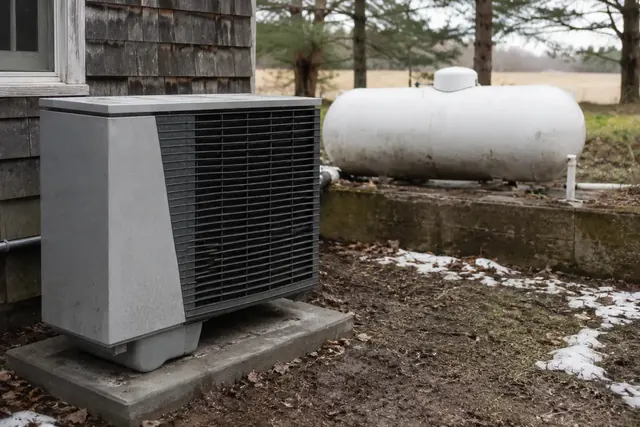
New heat pump condenser and propane tank at a rural Spokane County property
Spokane, WA

Propane-to-Heat-Pump Conversion in Spokane, WA | Cutting Delivered Fuel Use on Rural Acreage

Spokane WA Heat Pump Installation is a heat pump contractor providing propane-to-heat-pump conversion for homeowners and property owners across Spokane County, WA and out to the Idaho state line. Every job starts from a load calculation rather than the size of whatever came out.

Propane heats a great many rural properties around Deer Park, Elk, Chattaroy and Nine Mile Falls, and it is the most expensive common heating fuel per unit of heat delivered. That makes the arithmetic on a propane conversion unusually favourable. The typical arrangement keeps the propane furnace as the backup and adds a heat pump that handles the majority of winter hours, which means the tank gets filled far less often. For most rural properties here that shift alone changes the annual heating cost substantially.

Request a quote

Tell us what you need and we will call you back.

Where the propane changeover typically sits
-20°17°32°47°65°85°100°
Higher heat pump share

Because propane costs more per unit of heat than natural gas, the economic balance point sits lower, meaning the heat pump stays in service through colder weather before the furnace takes over. That is why propane conversions show larger savings than gas conversions.

Highest costPropane per unit of delivered heat among common fuels
Backup onlyRole the propane furnace takes after conversion
Fewer fillsDirect practical result on delivered fuel
Propane to Heat Pump Conversion Spokane

Spokane WA Propane-to-Heat-Pump Conversion

What actually matters on a propane conversion

These are rural properties, which brings a specific set of considerations beyond the fuel arithmetic.

  • Changeover calculated against your actual delivered propane price, not a regional average
  • Existing propane furnace assessed for condition and remaining life before building on it
  • Rural electrical service capacity confirmed, since it often needs attention
  • Cold climate equipment specified so the propane share of the season is genuinely small

Propane pricing is what makes this conversion work, and it deserves a moment of honesty: propane is bought at a delivered price that varies by supplier, contract and season, so the balance point calculation needs your actual price rather than a published average. Bring a recent delivery invoice to the assessment. It is the single most useful document for working out what this will actually save you.

The usual approach

Assume propane is expensive, install the heat pump and set the changeover to whatever the controls default to.

How we do it

Use your actual delivered propane price from a recent invoice to calculate the changeover, so the heat pump stays in service exactly as long as it is genuinely cheaper.
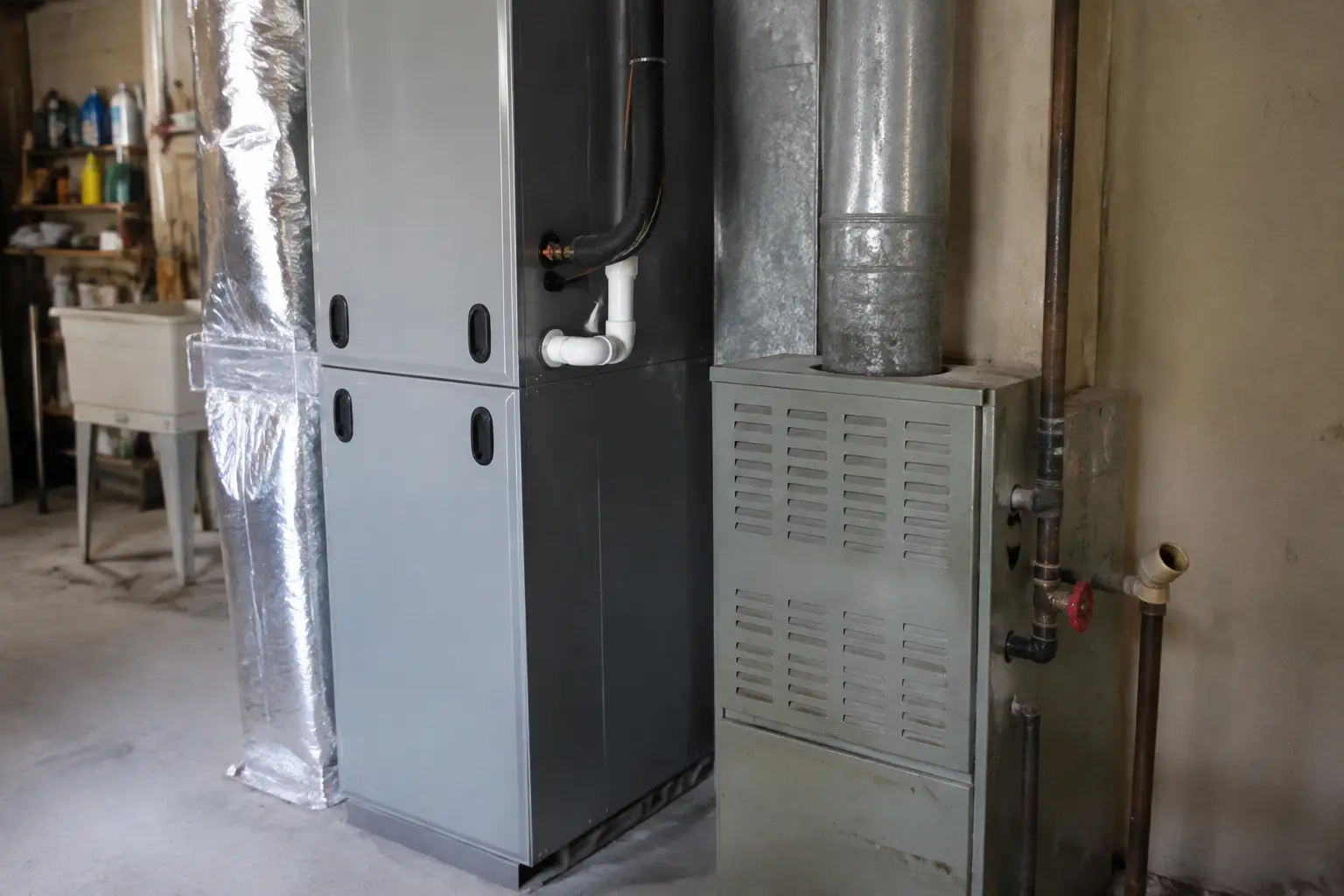
Propane furnace disconnected beside a new heat pump air handler

At a glance

Configuration
Dual fuel, heat pump plus propane furnace
Changeover basis
Actual delivered propane price
Furnace role
Deep cold backup only
Equipment
Cold climate specification
Detail

Why propane conversions show the best arithmetic

The economic balance point is where the cost per delivered BTU is equal between the two fuels. Because propane costs considerably more per BTU than natural gas, that crossover point sits at a lower outdoor temperature, which means the heat pump remains the cheaper option deeper into cold weather before the furnace takes over.

The practical consequence is that a propane property sees a larger share of its winter carried by the heat pump than an equivalent natural gas property would. Combined with a cold climate unit that holds capacity well below zero, the propane furnace can end up running only during genuine cold snaps, which is exactly the outcome that makes these conversions worth doing.

What separates a good job from an average one

  • Delivered propane price varies by supplier and contract, so the balance point calculation is property specific rather than regional.
  • Rural electrical service is frequently the constraint, and capacity needs checking before equipment is specified.
  • Long driveways and gate access affect installation logistics and matter for future service calls in winter.
  • Power outages are more common on rural circuits, and a propane furnace with a generator connection has a resilience value worth keeping.
  • Tank ownership and contract terms sometimes carry minimum annual purchase requirements, which is worth checking before dramatically reducing consumption.

What drives the cost of a propane conversion

Per gallonYour actual price drives the calculation
BackupFurnace role after conversion
RuralService capacity often the constraint

The conversion cost is the heat pump outdoor section, the cased coil, line set and controls, plus any electrical capacity work the property needs. The propane furnace, ductwork and gas piping stay in place.

The saving is easier to quantify here than on most jobs, because propane arrives as a measured delivery at a known price. We work out the expected reduction in gallons from the calculated load and the balance point, and show you that arithmetic rather than describing it in general terms.

How it runs

What happens, in order

Step 01

Gather the numbers

We take your actual delivered propane price and consumption history, and check the electrical service capacity.

Step 02

Calculate the crossover

The economic balance point is worked out from your real fuel price and the proposed equipment's efficiency at that temperature.

Step 03

Install

The outdoor unit and cased coil go in, the line set is run, and the control system is wired for dual fuel changeover.

Step 04

Verify both modes

Heat pump and propane operation are each verified independently, the changeover is set, and simultaneous operation is locked out.

Before we arrive to assess a propane conversion

These jobs are on rural properties, and the assessment covers more ground than a suburban visit.

  1. Have a recent propane delivery invoice available showing your actual delivered price per gallon, as this drives the entire calculation.
  2. Note your annual propane consumption if you know it, since it gives a useful cross check against the calculated heating load.
  3. Check your electrical panel's main breaker rating and photograph it, because rural service capacity is often the limiting factor.
  4. Make sure the driveway is passable for a work vehicle, and tell us about any gate codes or access arrangements.
  5. Check whether your tank is leased and whether the contract carries a minimum annual purchase, because reducing consumption sharply can have contractual implications.

Frequently asked questions

Will I still need propane after the conversion?
Yes, but far less of it. The propane furnace stays as the backup for genuinely cold weather while the heat pump handles the mild majority of the winter. The practical result is that the tank gets filled noticeably less often rather than not at all.
Why is a propane conversion better value than a natural gas one?
Because propane costs more per unit of heat delivered. That pushes the economic balance point to a lower outdoor temperature, so the heat pump stays in service through colder weather before the furnace takes over, and it carries a larger share of the season.
What if the power goes out?
This matters more on rural circuits than in town. Keeping the propane furnace gives you a heat source that will run from a generator, which is a genuine resilience argument for the dual fuel arrangement rather than removing the furnace entirely.
Do I need to be present while you convert from propane?
At the assessment, yes, because we need your delivery invoice and your input on where the outdoor unit goes. During the installation itself someone needs to provide access, particularly on properties with gated driveways.
Do you offer free quotes for propane to heat pump conversion?
Yes, and the quote includes an actual saving estimate worked from your delivered propane price and consumption rather than a general claim. Bring a recent invoice and the numbers become specific.
Does reducing my propane use affect my tank contract?
It can, and it is worth checking. Some leased tank agreements carry a minimum annual purchase requirement, and a conversion that cuts consumption sharply could bump into it. We raise this at the assessment because it is the kind of thing people find out afterwards.

Propane-to-Heat-Pump Conversion in Spokane

Phone
509-352-6630
Quote
Free, includes the load calculation measurements
Typical duration
Cold climate specification
Service area
Spokane County, WA and Post Falls, ID

Propane-to-Heat-Pump Conversion in Spokane, WA

Call for a load calculation and an itemised quote. You keep the numbers either way.

Request a quote

509-352-6630