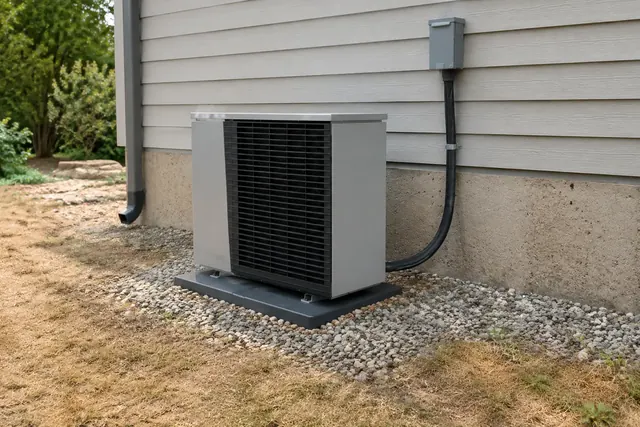
Central split system heat pump outdoor unit on a pad at a Spokane home
Spokane, WA

Central Heat Pump Systems in Spokane, WA | AHRI-Matched Split Systems for Whole-House Heating

Spokane WA Heat Pump Installation is a heat pump contractor providing central heat pump systems for homeowners and property owners across Spokane County, WA and out to the Idaho state line. Every job starts from a load calculation rather than the size of whatever came out.

A central heat pump is a split system: an outdoor section containing the compressor and outdoor coil, and an indoor air handler containing the blower and indoor coil, connected by a refrigerant line set. The two halves have to be a certified matched pair, because the published efficiency and capacity numbers only apply to the specific combination that was tested together. Mixing an outdoor unit with whatever indoor coil happens to be in stock produces a system with no valid rating at all. Most central changeouts take one to two days.

Request a quote

Tell us what you need and we will call you back.

AHRI rated heating capacity test point
-20°17°32°47°65°85°100°
47°F rating point

Published heating capacity is measured at 47°F outdoor temperature. Spokane's design condition is far colder than that, which is why we read the expanded performance tables at 17°F and 5°F rather than quoting the headline number.

2Matched sections, indoor and outdoor, rated as one pair
1-2 daysTypical changeout on an existing system
15-20 yrsRealistic service life with annual maintenance
Central Heat Pump Systems Spokane

Spokane WA Central Heat Pump Systems

What actually matters on a central system

Central systems are the default for houses that already have ducts, and the difference between a good one and a poor one is mostly in the commissioning.

  • Indoor and outdoor sections specified as a certified matched pair
  • AHRI reference number recorded on the quote, not just the model numbers
  • Line set either replaced or verified clean and correctly sized for the new equipment
  • Existing pad checked for level and settlement before the new unit goes on it

Reusing an existing line set on a central changeout is a decision that deserves more scrutiny than it usually gets. If the old system used a different refrigerant, or failed with a burnout, the residual oil and contamination in that line set will damage the new compressor. Line set diameter also has to suit the new equipment, and it is not always the same. We inspect, flush or replace as the situation requires and we tell you which of those three we are doing and why.

The usual approach

Swap the outdoor unit, leave the indoor coil and line set alone, and hand over a system whose real efficiency nobody has ever verified.

How we do it

Specify a certified matched pair, record the AHRI reference on the paperwork, and either replace the line set or document why the existing one is suitable.
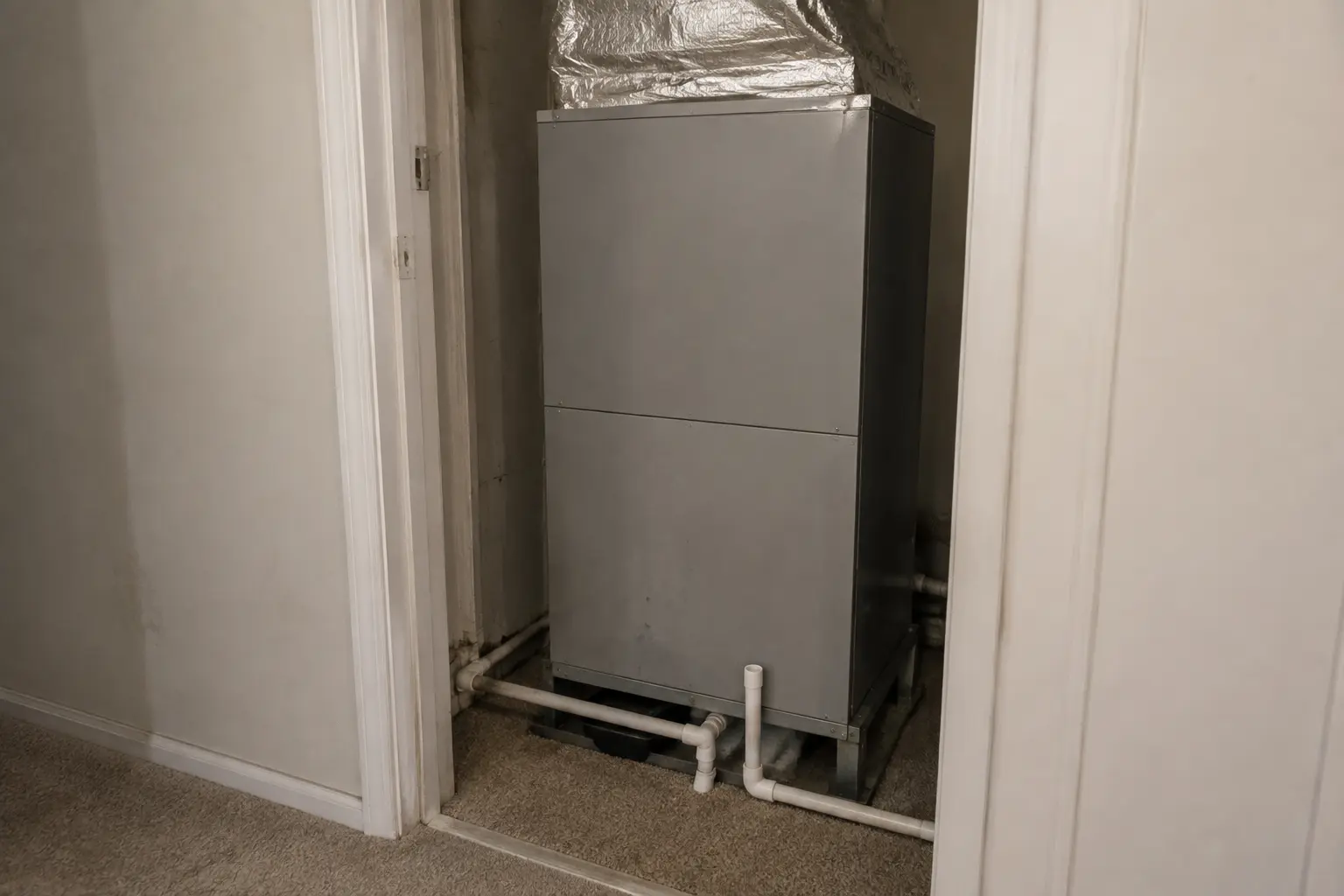
Indoor vertical air handler and cased coil for a central heat pump system

At a glance

System type
Split, matched indoor and outdoor
Rating basis
AHRI certified pairing
Line set
Replaced or verified per inspection
Typical life
15 to 20 years with maintenance
Detail

Sizing and equipment selection for a central system

Central systems are sized from a whole-house ACCA Manual J load calculation, then equipment is selected under Manual S using the manufacturer's expanded performance data. Because heating loads in Spokane dominate cooling loads, the selection usually gets driven by the winter condition, and the resulting equipment is often larger in cooling capacity than a cooling-only calculation would suggest.

That creates a real tension. A unit sized to cover the full heating load at 5°F may be oversized for the July cooling load, which hurts humidity control. Modern variable-speed equipment resolves most of this by turning down, which is one of the practical reasons we specify inverter-driven systems for Spokane rather than single-stage units.

What separates a good job from an average one

  • A matched pair has one AHRI certificate. If nobody can produce that reference number, the efficiency claim on the quote is not backed by anything.
  • Refrigerant charge is verified by subcooling or superheat measurement against the manufacturer's target, not by pressure alone.
  • The condensate drain needs a correctly built trap and a secondary safety switch, because a blocked drain in a closet air handler causes ceiling damage before anyone notices.
  • Outdoor unit clearances matter for defrost performance, particularly on the side facing a fence or a wall.
  • The equipment pad needs to be level and stable. A settled pad puts the compressor at an angle and stresses the line set connections.

What drives the cost of a central heat pump system

1AHRI certificate per matched pair
15-20 yrsExpected service life
2Sections that must be replaced together

Central system pricing is driven by capacity, the efficiency tier you choose, and whether the indoor section can stay in its existing position. A straight changeout in the same location is the least expensive path. Relocating the air handler, changing from a horizontal to a vertical configuration, or adding a new condensate route all add scope.

Replacing only the outdoor unit is occasionally proposed as a cheaper option. We will explain why that produces an unmatched, unrated system, and we would rather lose the job than install one.

How it runs

What happens, in order

Step 01

Load calculation

A whole-house Manual J establishes the actual heating and cooling loads rather than working from the size of the outgoing equipment.

Step 02

Matched pair selection

Indoor and outdoor sections are chosen as a certified pair under Manual S, and the AHRI reference goes on your quote.

Step 03

Changeout

Old refrigerant is recovered, the old sections come out, the line set is replaced or verified, and the new pair is installed and brazed under nitrogen.

Step 04

Charge and commission

The system is evacuated, charged to the manufacturer's subcooling target, and airflow and temperature split are verified in both heating and cooling.

Before we arrive to work on a central system

A central changeout involves both the outdoor unit and the indoor air handler, so both ends need to be reachable on the day.

  1. Clear a path from the driveway to the indoor air handler wide enough to move equipment, including any tight basement stairs.
  2. Clear three feet around the outdoor unit and cut back shrubs that have grown into that space over the years.
  3. Empty the closet or utility area around the air handler completely if it doubles as storage.
  4. Locate your electrical panel and make sure it is accessible, since the disconnect and circuit are checked as part of the changeout.
  5. If the indoor unit sits above a finished ceiling, move anything valuable from the room below as a precaution while the coil is disconnected.

New central systems now ship with A2L refrigerants rather than R-410A. Our A2L refrigerant guide explains what changed, what it means for servicing, and why it matters when you are choosing between a current model and old stock. Read the guide.

Frequently asked questions

What is the difference between a central heat pump and a central air conditioner?
A heat pump can run the refrigerant cycle in both directions, so the same equipment that cools in summer also heats in winter. An air conditioner only runs one way and needs a separate furnace for heat. Physically the outdoor units look almost identical, and the difference is the reversing valve inside.
Can I replace just the outdoor unit and keep my old indoor coil?
We do not recommend it and we generally will not do it. The published capacity and efficiency figures only apply to a certified matched pair, so mixing sections gives you a system with no valid rating, likely poor performance, and often a voided manufacturer warranty.
Does the existing refrigerant line set need replacing?
It depends on what we find. If the old system used a different refrigerant, suffered a compressor burnout, or the line diameter does not suit the new equipment, the line set gets replaced. Otherwise it can sometimes be flushed and reused, and we tell you which applies to your house before starting.
Do I need to be present while you replace my central system?
Someone needs to be there at the start and end of the job. The start is for access and to confirm equipment placement, and the end is so we can walk you through the thermostat and the new system's behaviour, which is noticeably different from what a furnace does.
Do you offer free quotes for central heat pump systems?
Yes. A central system quote includes a load calculation rather than a size guessed from your old unit, and you keep those numbers whether or not you use us.
How long will a central heat pump last in Spokane?
Fifteen to twenty years is realistic with annual maintenance. Spokane's wide temperature swing means the equipment works hard in both directions, and the outdoor coil accumulates pollen in spring and wildfire ash in late summer, so annual cleaning genuinely affects the number.

Central Heat Pump Systems in Spokane

Phone
509-352-6630
Quote
Free, includes the load calculation measurements
Typical duration
15 to 20 years with maintenance
Service area
Spokane County, WA and Post Falls, ID

Central Heat Pump Systems in Spokane, WA

Call for a load calculation and an itemised quote. You keep the numbers either way.

Request a quote

509-352-6630