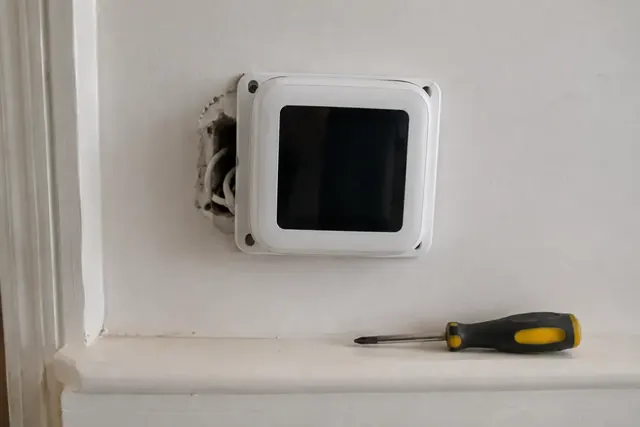
Smart thermostat mounted on its sub-base in a Spokane hallway
Spokane, WA

Heat Pump Thermostat Installation in Spokane, WA | Backup Heat Lockout and Staging Configured Properly

Spokane WA Heat Pump Installation is a heat pump contractor providing heat pump thermostat installation for homeowners and property owners across Spokane County, WA and out to the Idaho state line. Every job starts from a load calculation rather than the size of whatever came out.

A heat pump needs a thermostat that understands it. A standard thermostat has no concept of a reversing valve, no way to stage backup heat correctly and no lockout to stop expensive resistance heat running when the heat pump could handle the load alone. Fitting the wrong thermostat, or fitting the right one and leaving it on default settings, quietly costs a great deal over a winter. The physical installation takes under an hour. The configuration is where the value is, and it is the part most commonly skipped.

Request a quote

Tell us what you need and we will call you back.

Backup heat lockout, the setting that saves the most
-20°17°32°47°65°85°100°
~35°F lockout

Setting a lockout temperature stops resistance backup heat engaging above a chosen outdoor temperature, where the heat pump can comfortably carry the load alone. Left unset, backup heat contributes far more often than it needs to, and it converts electricity to heat at exactly one to one.

O/BReversing valve terminal a heat pump thermostat needs
Under 1 hrPhysical installation time
LockoutSetting that stops backup heat running unnecessarily
Heat Pump Thermostat Installation Spokane

Spokane WA Heat Pump Thermostat Installation

What actually matters on a thermostat installation

Thermostats are the cheapest component in the system and one of the largest influences on what it costs to run.

  • Thermostat confirmed compatible with heat pump operation and with your specific equipment
  • Reversing valve terminal wired and configured correctly for O or B logic
  • Backup heat staging and lockout temperature set rather than left on defaults
  • Setback behaviour explained, since deep setbacks work differently on a heat pump

Deep temperature setbacks work differently on a heat pump than on a furnace, and this catches people out. A furnace recovers a large setback quickly using high output. A heat pump recovering the same setback often triggers backup resistance heat, which costs far more than the setback saved. Modest setbacks, or a thermostat with intelligent recovery that starts early and avoids backup heat, are the better approach here. We explain this at handover because it changes how you should use the system.

The usual approach

Fit the thermostat the customer bought, connect the wires that were there before, confirm it turns on and leave the defaults in place.

How we do it

Confirm compatibility with the actual equipment, configure the reversing valve logic, set backup heat staging and lockout properly, and explain how setbacks should be used on a heat pump.
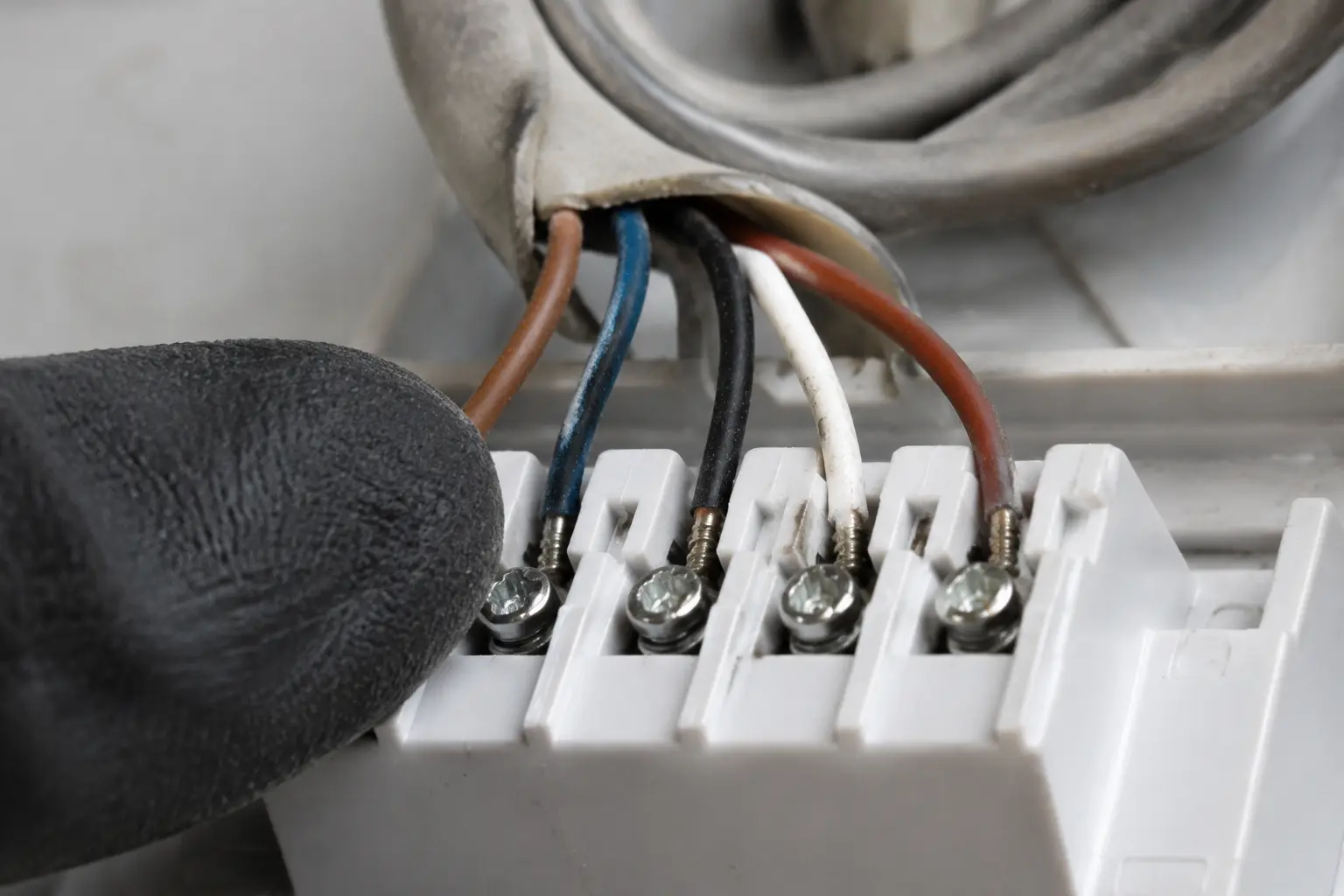
Low voltage conductors landed on a heat pump thermostat sub-base

At a glance

Required terminals
Includes O or B for reversing valve
Configuration
Staging and lockout set per system
Install time
Under one hour
Setback advice
Modest, or intelligent recovery
Detail

Configuring a thermostat for heat pump operation

The configuration items that matter most are the reversing valve logic, the number of heat pump and auxiliary heat stages, the auxiliary heat lockout temperature, the compressor lockout temperature if applicable, and the minimum compressor off time that protects against short cycling.

The auxiliary lockout is the one with the largest financial effect. It prevents electric resistance backup from engaging above a set outdoor temperature, on the basis that the heat pump can carry the load alone in milder conditions. A system left on defaults will frequently call for backup heat far more readily than it needs to, and because resistance heat has a coefficient of performance of exactly one, every hour it runs unnecessarily is money spent for nothing.

What separates a good job from an average one

  • Compatibility is equipment specific. Variable-speed and communicating systems often require the manufacturer's own controller rather than a third party smart thermostat.
  • The reversing valve terminal is energised in cooling on some equipment and in heating on others, and getting that logic backwards produces a system that heats when it should cool.
  • A common wire is needed to power most smart thermostats continuously, and older Spokane homes frequently do not have one run to the thermostat location.
  • Outdoor temperature sensing enables the lockout function, and on some systems that requires an additional sensor rather than internet weather data.
  • Thermostat location affects everything. Mounted on an exterior wall, above a supply register or in direct sun, it reads a temperature the house does not have.

What drives the cost of a thermostat installation

Under 1 hrTypical installation
O/BReversing valve terminal required
1Common wire needed for most smart models

Thermostat installation is a short job unless the wiring at the wall does not support the chosen device. The most frequent complication in older Spokane homes is the absence of a common wire, which either needs running or working around with an adapter.

Configuration time is included rather than charged separately. Fitting a heat pump thermostat and leaving it on defaults would take less time and cost you considerably more over a winter, so we treat the setup as part of the job.

How it runs

What happens, in order

Step 01

Check compatibility

We confirm the thermostat suits your specific equipment, since variable-speed and communicating systems often need a manufacturer controller.

Step 02

Verify the wiring

The existing wiring is checked for the terminals the new thermostat needs, particularly the reversing valve terminal and a common wire.

Step 03

Install

The old thermostat is removed, the sub-base is mounted and wired, and connections are confirmed at the air handler end as well.

Step 04

Configure and explain

Reversing valve logic, staging and backup heat lockout are set for your system, and we explain how setbacks should be used on a heat pump.

Before we arrive to install your thermostat

Thermostat work is quick, and almost all of the delays come from wiring that is not what anyone expected.

  1. Take a photograph of your existing thermostat's wiring before we arrive if you are comfortable removing the faceplate, since it tells us immediately whether a common wire exists.
  2. Have the make and model of your heat pump equipment available, as compatibility depends on the equipment rather than the house.
  3. Clear access to the indoor air handler, since the other end of the thermostat wiring lands there and configuration happens at both ends.
  4. If you have already bought a thermostat, have it available and unopened so we can confirm compatibility before installation.
  5. Have your home network password ready if the thermostat is a connected model, as setup includes getting it online.

Frequently asked questions

Can I use any smart thermostat with a heat pump?
Not any, and this is worth checking before you buy one. The thermostat needs heat pump support including a reversing valve terminal and proper backup heat staging. Variable-speed and communicating systems frequently require the manufacturer's own controller, and fitting a third party device to those can disable features you paid for.
What is backup heat lockout and why does it matter?
It is a setting that prevents electric resistance backup heat from running above a chosen outdoor temperature. Resistance heat converts electricity to heat at exactly one to one, while the heat pump does considerably better than that, so every hour of unnecessary backup heat is money wasted. Left on defaults, most systems call for it far more than they need to.
Should I set back the temperature at night with a heat pump?
Only modestly, or use a thermostat with intelligent recovery. A deep setback on a heat pump often triggers backup resistance heat during recovery, which costs more than the setback saved. This is genuinely different from how a furnace behaves and it catches most people out.
Do I need to be present while you install a thermostat?
Briefly, yes. We need access to the thermostat location and the air handler, and we want a few minutes with you afterwards to walk through the settings, because the configuration is where the value is.
Do you offer free quotes for thermostat installation?
Yes, and we can usually give you a firm price over the phone if you can tell us your equipment model and photograph the existing thermostat's wiring. There is rarely a need for a survey visit.
My house does not have a common wire. What now?
That is very common in older Spokane homes. The options are running a new cable to the thermostat location, using an adapter that shares an existing conductor, or choosing a thermostat that does not require continuous power. We will tell you which is practical in your house and what each costs.

Heat Pump Thermostat Installation in Spokane

Phone
509-352-6630
Quote
Free, includes the load calculation measurements
Typical duration
Modest, or intelligent recovery
Service area
Spokane County, WA and Post Falls, ID

Heat Pump Thermostat Installation in Spokane, WA

Call for a load calculation and an itemised quote. You keep the numbers either way.

Request a quote

509-352-6630