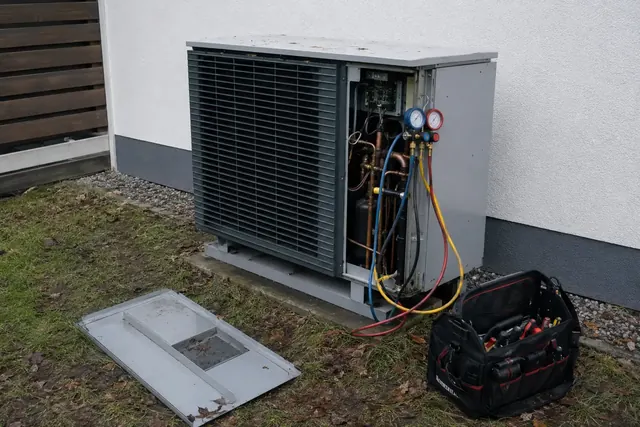
Spokane WA Heat Pump Installation is a heat pump contractor providing heat pump repair for homeowners and property owners across Spokane County, WA and out to the Idaho state line. Every job starts from a load calculation rather than the size of whatever came out.
Most heat pump faults fall into a short list: a failed run capacitor, a burnt contactor, a low refrigerant charge caused by a leak, a defrost control problem, or a blower or fan motor at the end of its life. Diagnosing which of those you have takes electrical measurement and refrigerant readings rather than guesswork, and the difference matters because replacing a capacitor on a system whose real problem is a leaking coil just delays the same failure. We diagnose first, explain what we found, and quote the repair before doing it.
A system with a slightly low charge or a weakening compressor often runs acceptably in mild weather and fails visibly once outdoor temperature drops into the teens, which is when the equipment is working hardest and has no margin left.
The difference between a repair that lasts and one that repeats is almost always in the diagnosis rather than the part.
Adding refrigerant to a system that is low is treating the symptom. A sealed refrigerant circuit does not consume refrigerant, so if it is low there is a leak, and topping it up without finding that leak means you will be paying for the same visit again next year. We locate the leak, tell you what repairing it involves, and let you make an informed decision. Sometimes the honest answer is that the leak is in a coil and repair is not economic.
Replace the part that usually fails, add refrigerant if the pressures look low and get the system running again before leaving.
Measure electrically under load and check pressures against the manufacturer's targets, identify the actual cause including any leak source, then quote the fix.
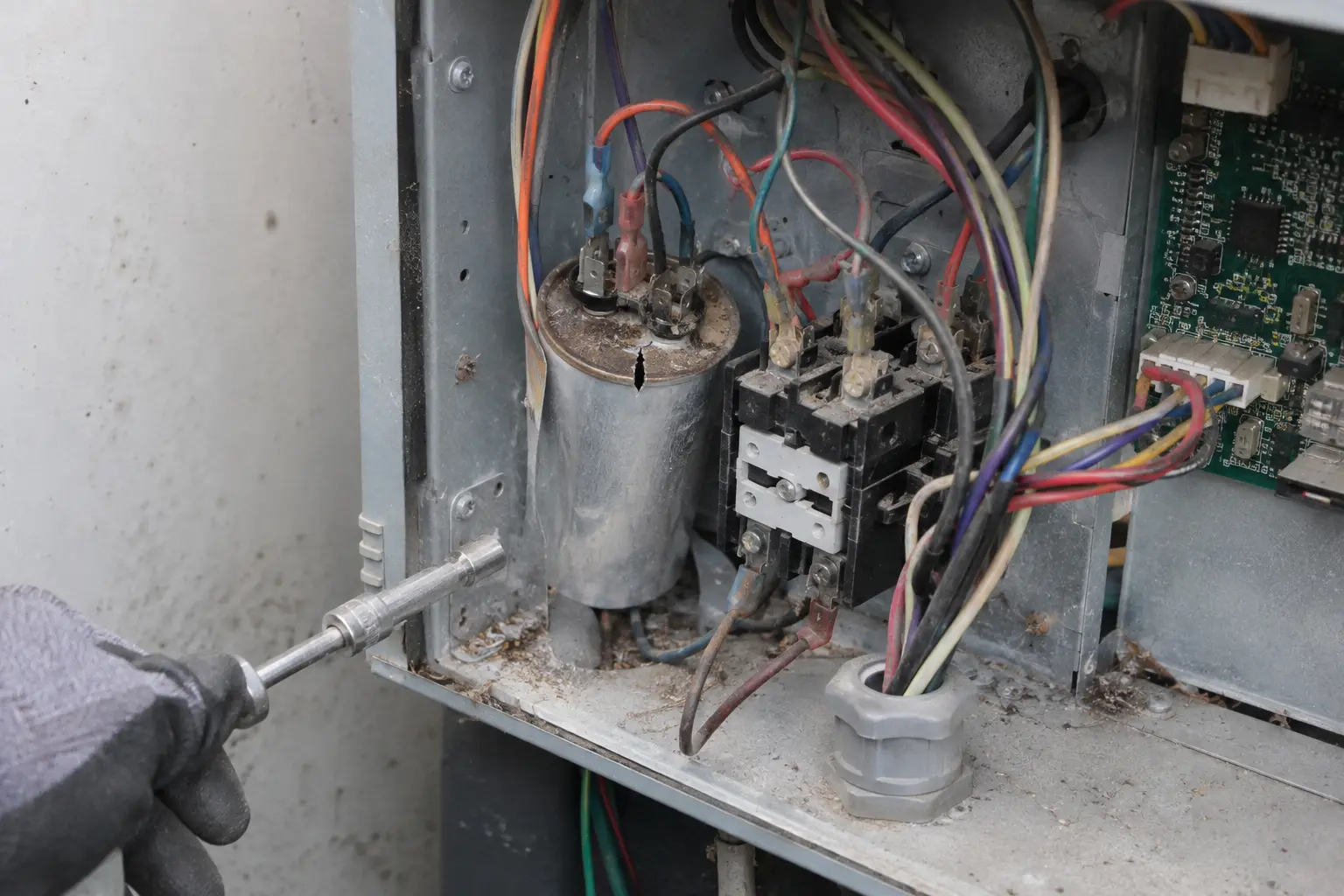
Diagnosis starts with the electrical side because it is faster and accounts for most failures. Capacitors are measured under load rather than tested for continuity, contactors are inspected for pitting and checked for correct pull-in, and motor windings are measured for resistance and ground faults.
If the electrical side checks out, the refrigerant circuit gets examined. Suction and liquid pressures are converted to saturation temperatures and compared against the manufacturer's target superheat and subcooling for the actual indoor and outdoor conditions on the day. That comparison distinguishes an undercharge from a restriction from an airflow problem, three faults that look similar on a gauge set and need entirely different repairs.
Repair cost is the diagnostic visit plus parts and labour for whatever is actually wrong. Electrical component failures are at the lower end. Refrigerant leaks vary enormously depending on where the leak is, and a leaking coil can approach replacement territory.
We give you the repair cost against the replacement cost when the repair is substantial, because on an older system that comparison is the real decision. We are not going to recommend a large repair on a system that will need replacing within two years without saying so.
We check the electrical side under load first, then move to refrigerant pressures compared against the manufacturer's targets for the day's conditions.
You get told what the fault is, what caused it, and whether anything else is likely to follow it, in plain terms.
The repair is priced before any part is fitted, including a replacement comparison if the repair is substantial.
The fix is carried out and the system is rechecked under running conditions rather than simply switched on and left.
A few minutes of observation before the visit genuinely shortens the diagnosis and reduces what you pay for diagnostic time.
Call for a load calculation and an itemised quote. You keep the numbers either way.
Request a quote