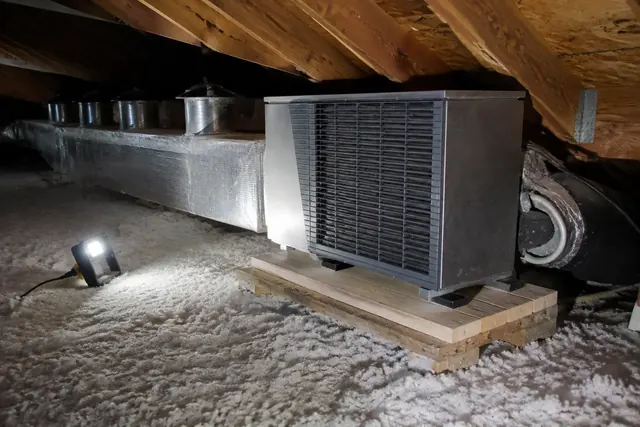
Spokane WA Heat Pump Installation is a heat pump contractor providing ducted heat pump systems for homeowners and property owners across Spokane County, WA and out to the Idaho state line. Every job starts from a load calculation rather than the size of whatever came out.
A ducted heat pump moves conditioned air through the same trunk and branch system a furnace would use, which makes the ductwork just as important as the equipment. Most retrofits in Spokane inherit ducts that were sized for a 140°F furnace supply temperature, and a heat pump delivers air closer to 95°F to 105°F, so the same rooms need noticeably more airflow to feel the same. We measure total external static pressure before quoting anything, then design to ACCA Manual D so the blower is not fighting the duct it is attached to. A typical single-system changeout runs one to two days, with duct modification work adding time depending on what we find.
A gas furnace pushes roughly 130°F to 140°F supply air. A heat pump delivers closer to 95°F to 105°F, which is still well above skin temperature but feels different at the register. The fix is airflow and register selection, not turning the thermostat up.
Ducted equipment is the easiest part of the job to specify and the hardest part to install well. These are the things that decide whether the system performs the way the submittal says it will.
The single most common problem we find on Spokane ducted retrofits is a return side that was never big enough. A furnace tolerates a starved return because it only runs in short high-temperature bursts. A variable-speed heat pump runs long and low, so a restricted return shows up immediately as noise, short cycling and rooms that never quite catch up. We usually end up adding return area somewhere, and that work is quoted openly rather than discovered halfway through.
Match the new air handler to the old furnace's cabinet size, connect it to the existing plenum and hope the duct can carry the extra airflow.
Measure static pressure across the coil, the filter and the duct separately, so you know which component is causing the restriction before anyone buys equipment.
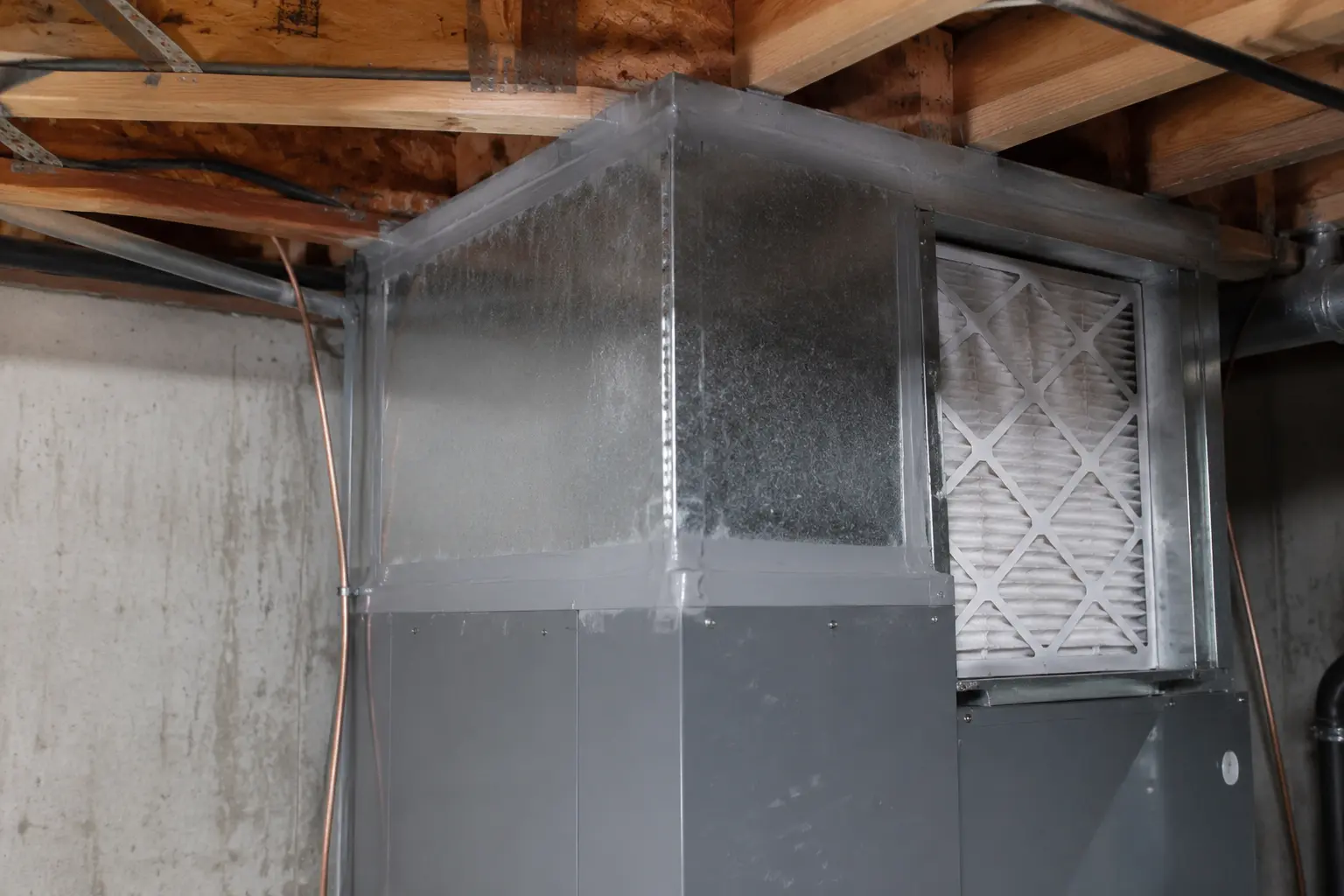
Equipment selection follows ACCA Manual S, which means matching the manufacturer's expanded performance data to the calculated load at Spokane's winter design condition rather than picking a nominal tonnage off a chart. A nominal three ton unit does not produce three tons at 5°F, and the difference between two models with identical nameplate ratings can be substantial once you read the low-temperature capacity tables.
For ducted systems specifically, we also check the blower's rated airflow at the design static pressure. A unit that delivers its rated CFM at 0.3 in wc may lose fifteen percent of that airflow at 0.7 in wc, which quietly turns a correctly sized system into an undersized one. That check happens on paper before the equipment is ordered.
Ducted pricing separates into equipment and sheet metal, and the sheet metal is where projects diverge. A house with a serviceable trunk, adequate returns and reachable attic runs is a straightforward changeout. A house needing a new return path, a larger trunk section or sealing across a long attic run is a different scope entirely.
We will not quote a ducted job without measuring static pressure first, because a number quoted without that measurement is a guess that gets corrected upward later. Any duct modification we expect is itemised separately from the equipment so you can see exactly what is being paid for.
We take total external static pressure at the air handler, inspect the trunk and returns, and photograph anything in the attic or crawlspace that will need work.
A room by room load calculation sets the required airflow, then the duct design is checked against it and the shortfalls are identified.
The air handler and outdoor section go in, followed by any plenum, trunk or return modifications the design called for.
Airflow is verified at the equipment and at the registers, dampers are set and labelled, and the final static reading goes on the invoice.
Ducted work means access to the air handler, the duct runs and every supply register in the house. A little clearing beforehand keeps the crew moving.
Airflow requirements come straight out of the load calculation. Our Spokane heat pump sizing and climate guide walks through the Climate Zone 5B design conditions we calculate against and why rule of thumb tonnage no longer passes. Read the guide.
Call for a load calculation and an itemised quote. You keep the numbers either way.
Request a quote