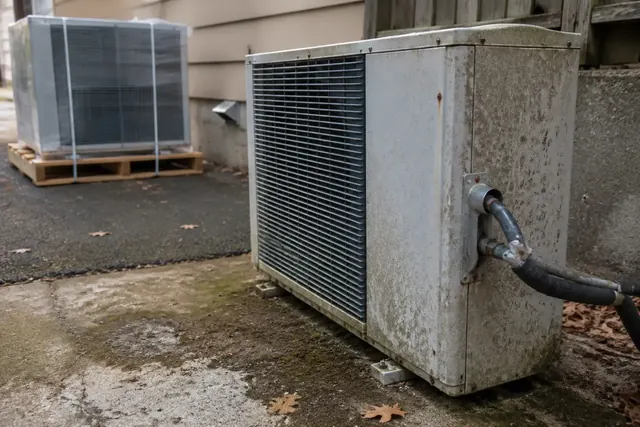
Spokane WA Heat Pump Installation is a heat pump contractor providing heat pump replacement for homeowners and property owners across Spokane County, WA and out to the Idaho state line. Every job starts from a load calculation rather than the size of whatever came out.
Replacing a heat pump is an opportunity that most replacements waste. The house has almost certainly changed since the last system went in, through new windows, added insulation, a finished basement or a converted garage, and the original sizing may have been generous to begin with. We recalculate rather than reading the model number off the old unit and ordering its modern equivalent. There is also a repair or replace decision to make honestly, and we would rather tell you a five year old system is worth fixing than sell you a new one.
There is no single rule, but a system past fifteen years facing a compressor or coil failure is usually better replaced. Below about ten years, most failures are worth repairing. The middle is where an honest conversation matters more than a policy.
A replacement is a chance to correct whatever was wrong with the original installation, and most of those corrections cost very little at this stage.
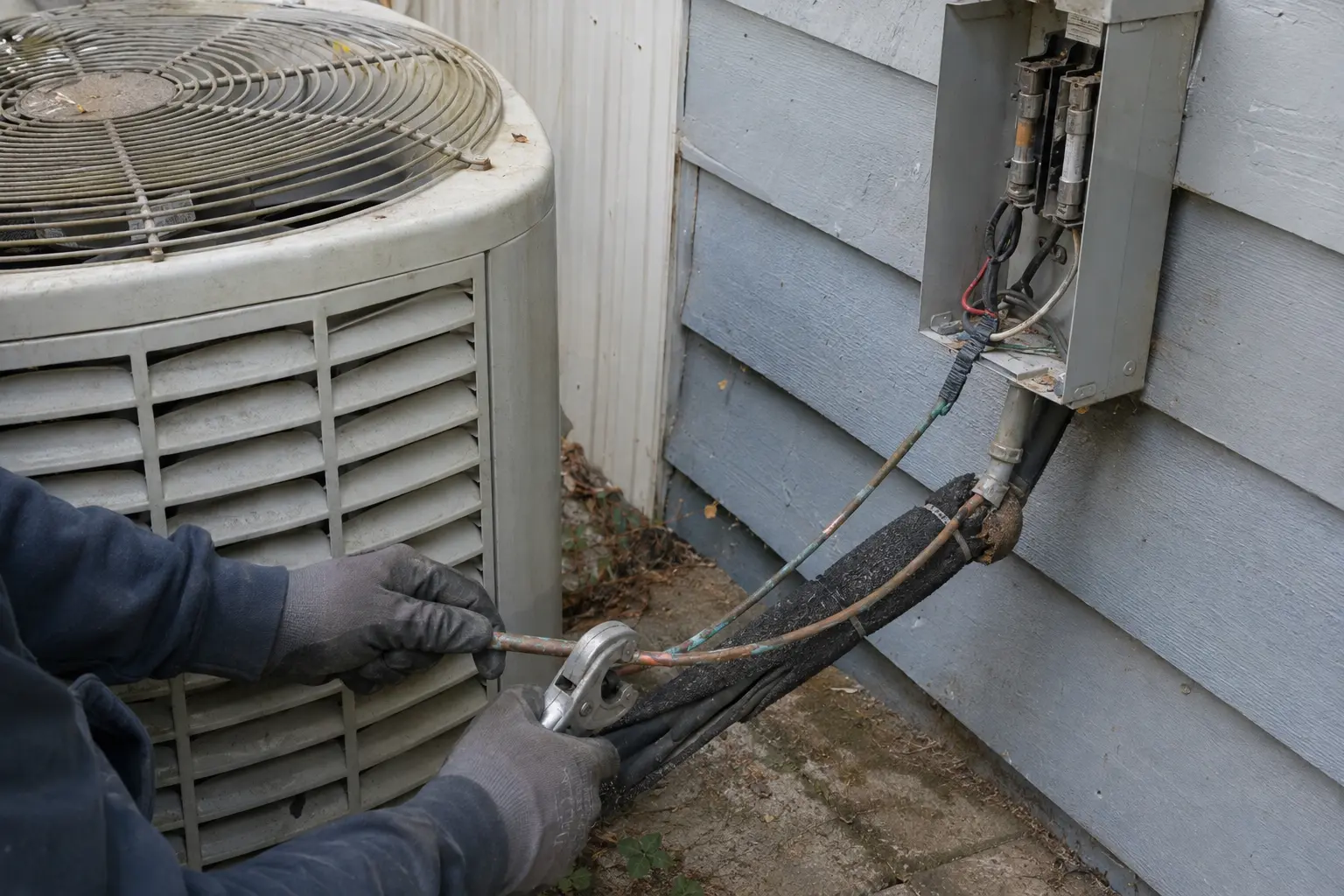
If the old system failed with a compressor burnout, the line set is contaminated with acid and debris, and reusing it will destroy the new compressor. This is not a theoretical concern, it is the most common cause of a repeat failure within two years of a replacement. Where a burnout has occurred we replace the line set or flush it thoroughly and fit a suction line filter drier, and we tell you which we have done.
Order the modern equivalent of whatever model is on the old nameplate, reuse everything that connects to it and get it running the same day.
Recalculate the load for the house as it stands today, assess why the old system failed, and treat the line set accordingly rather than assuming it is fine.
The most valuable thing about a replacement is the chance to correct the sizing. We routinely find systems that are a full ton oversized because the original was sized by rule of thumb and the house has been improved since. An oversized heat pump short cycles, controls humidity poorly in summer and wears its compressor faster.
Refrigerant is the other consideration on any replacement now. Systems using R-410A are being phased down under EPA rules, and new equipment ships with A2L refrigerants such as R-454B or R-32. That affects long-term serviceability and the availability of refrigerant for the system you are buying, which is worth understanding before you choose between current equipment and remaining old stock.
Replacement cost tracks the new equipment's capacity and efficiency tier, plus whatever the old installation left behind that needs correcting. Line set replacement, pad work, electrical upgrades and thermostat compatibility are the usual additions.
We give you the repair versus replace comparison in plain numbers where a repair is genuinely viable. A compressor replacement on a system that is eight years old and otherwise healthy is often the better financial decision, and we will say so.
We diagnose why the existing system failed and give you a straight repair or replace recommendation with the reasoning.
A fresh Manual J establishes what the house needs now, which frequently differs from what was installed originally.
Refrigerant is recovered into a cylinder, the old equipment comes out, and the line set is flushed or replaced based on the failure mode.
The new system is pressure tested, evacuated, weighed in and verified in both heating and cooling, with the readings recorded.
A replacement means removing an old system and installing a new one on the same day, so both directions of travel need to be clear.
Replacement is the point where the refrigerant question becomes real. Our A2L refrigerant guide covers the move away from R-410A, what R-454B and R-32 mean for servicing, and how it affects a system you are buying now. Read the guide.
Call for a load calculation and an itemised quote. You keep the numbers either way.
Request a quote