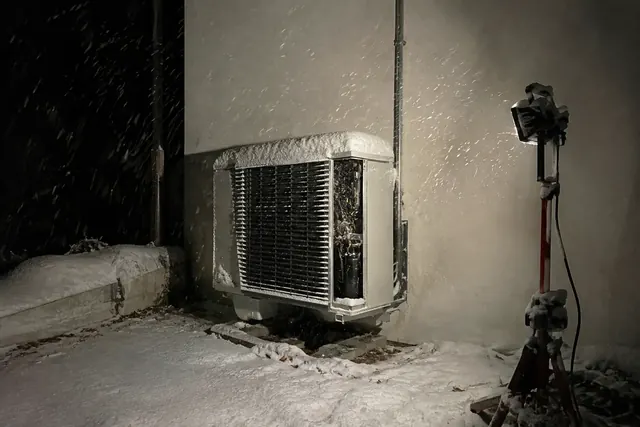
Heat pump outdoor unit lit by a work light during a night call in falling snow
Spokane, WA

Emergency Heat Pump Repair in Spokane, WA | No-Heat Callouts Triaged by Freeze Risk

Spokane WA Heat Pump Installation is a heat pump contractor providing emergency heat pump repair for homeowners and property owners across Spokane County, WA and out to the Idaho state line. Every job starts from a load calculation rather than the size of whatever came out.

An emergency is a house with no heat when the outdoor temperature is well below freezing, or a system doing something genuinely unsafe such as a burning smell or a breaker that keeps tripping. It is not a heat pump running slightly less efficiently than it did last month. We prioritise on that basis because a genuinely urgent call should not be sitting behind a routine one. When you phone, the most useful thing you can do is describe exactly what is and is not happening, since that determines both how fast we come and what we bring.

Request a quote

Tell us what you need and we will call you back.

Where a no-heat call becomes genuinely urgent
-20°17°32°47°65°85°100°
Below 20°F outside

Above freezing, a failed heat pump is uncomfortable. Below about 20°F outdoors it becomes a building protection issue, because indoor temperature falls fast enough to put plumbing at risk in unheated parts of the house.

0-5°FExtreme winter minimums that make no heat urgent
Em heatSetting that keeps most houses warm until we arrive
3Genuine emergencies: no heat in freezing weather, burning smell, repeated breaker trips
Emergency Heat Pump Repair Spokane

Spokane WA Emergency Heat Pump Repair

What actually matters on an emergency call

The goal is getting heat back safely, and there are a few things that reliably speed that up.

  • Emergency heat setting explained so most houses stay warm until we arrive
  • Freeze risk to plumbing assessed as part of prioritising the call
  • Safety issues such as burning smells treated as immediate regardless of temperature
  • What we bring is decided from your description, so the fix often happens on the first visit

Most systems have an emergency heat setting, and knowing where it is on your thermostat is genuinely valuable at eleven at night in January. It bypasses the heat pump entirely and runs the backup heat directly, which is expensive to operate but will keep your house warm and your pipes safe until someone arrives. If you have never located that setting, it is worth doing on a calm afternoon rather than in the dark during a failure.

The usual approach

Take every call in the order it came in and tell people with no heat in January to wait their turn behind routine maintenance visits.

How we do it

Triage on actual urgency, explain over the phone how to stay safe until arrival, and use your description to bring the parts most likely to fix it on the first visit.
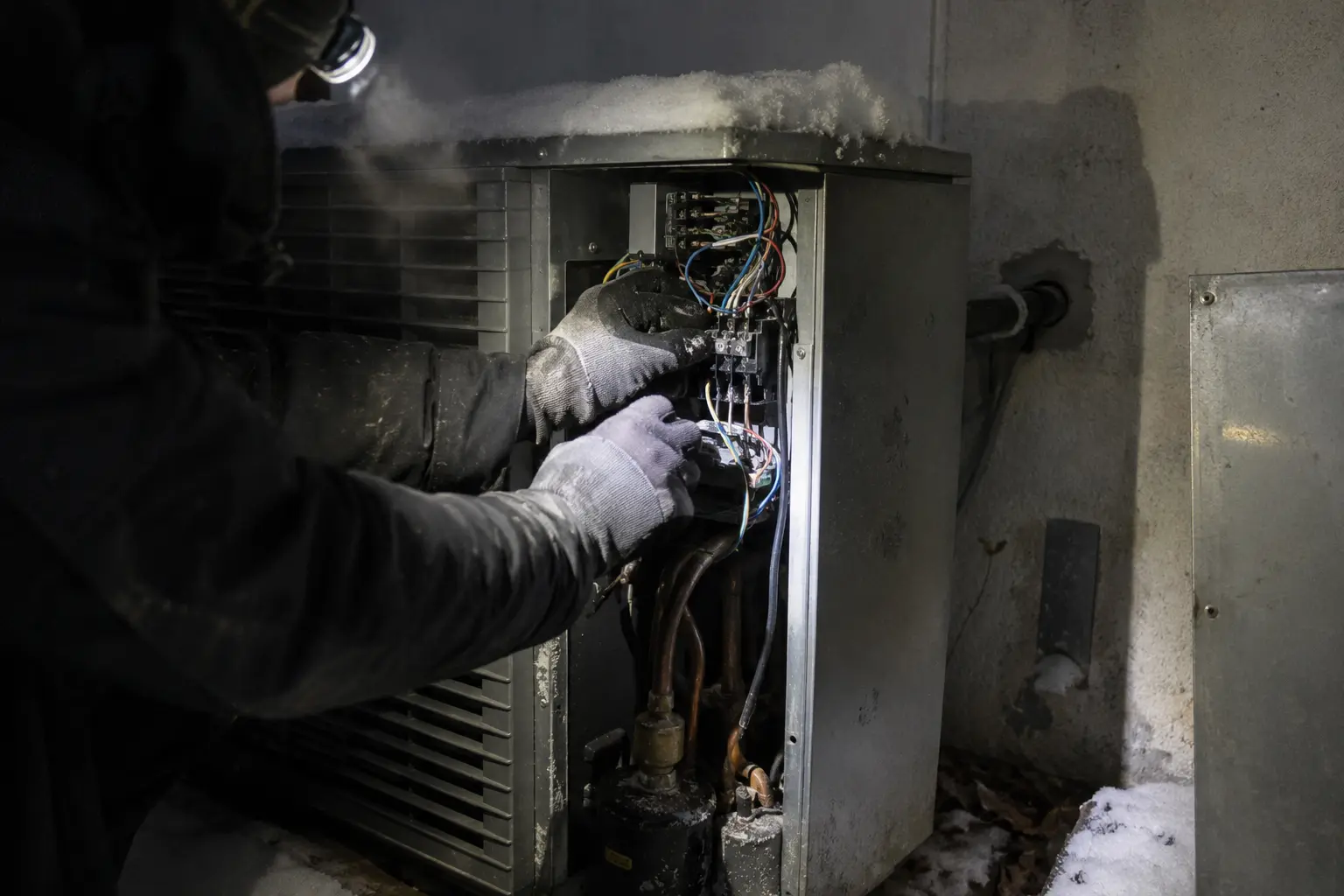
Technician working in a heat pump electrical compartment by headlamp at night

At a glance

Genuine emergency
No heat below freezing, burning smell, repeated trips
Interim measure
Emergency heat setting
Freeze risk
Assessed when prioritising
Parts
Selected from your description
Detail

What we do differently on a night callout

Night and cold weather diagnosis is harder in practical terms: refrigerant readings shift with ambient temperature, recovery is slower, and working by headlamp on a unit encased in snow is simply slower than the same job in daylight. We allow for that rather than rushing it, because a misdiagnosis at midnight means a second visit.

The most common genuine no-heat causes we find are a failed run capacitor, a welded or failed contactor, a defrost control fault leaving the outdoor unit iced up, and a tripped high pressure or float safety that has locked the system out. All four are things we carry parts for, which is why a clear description when you call so often means the problem is fixed on the first visit.

What separates a good job from an average one

  • A precise description of the symptom is worth more than any other information, because it determines what parts come on the van.
  • Repeatedly resetting a tripped breaker is genuinely dangerous. A breaker that trips more than once is doing its job and should be left off.
  • Burning smells are an immediate stop and disconnect situation regardless of how cold it is outside.
  • Space heaters used as a stopgap need to be on separate circuits and away from anything combustible, and never left running unattended overnight.
  • In extreme cold, opening cabinet doors under sinks on exterior walls helps protect plumbing while you wait.

How emergency calls are prioritised and charged

Below 20°FWhere no heat becomes urgent
Em heatInterim measure most houses have
First visitWhere most faults are fixed

Emergency and out of hours calls carry a higher rate than scheduled work, and we tell you that rate when you call rather than after the visit. If your situation can safely wait until the next working day, we will say so and book you in at the standard rate.

We would rather talk you through the emergency heat setting on the phone and attend the following morning than charge you a night rate for something that could have waited. That conversation happens before anyone is dispatched.

How it runs

What happens, in order

Step 01

Describe it precisely

On the phone we ask exactly what is and is not running, which determines urgency and which parts we bring.

Step 02

Make it safe

We talk you through emergency heat, breaker safety and freeze protection so the house is stable until arrival.

Step 03

Diagnose on site

The fault is found by measurement, allowing for the fact that cold weather shifts refrigerant readings.

Step 04

Repair or stabilise

Where the part is on the van we fix it there. Where it is not, we get heat into the house safely and return with the part.

What to do before we arrive on an emergency call

A few minutes of action before we get there keeps your house safe and frequently speeds up the repair.

  1. Switch the thermostat to emergency heat if your system has that setting, which keeps the house warm on backup heat while we travel.
  2. If a breaker has tripped, leave it off after the first reset attempt rather than resetting it repeatedly.
  3. If there is any burning smell, switch the system off at the thermostat and at the breaker and tell us that when you call.
  4. In severe cold, open cabinet doors under sinks on exterior walls and let a tap drip to reduce freeze risk to plumbing.
  5. Clear and salt the path to the outdoor unit if you safely can, since we will be working there in the dark.

Frequently asked questions

What counts as a real emergency?
No heat when it is well below freezing outside, any burning smell from the equipment, or a breaker that trips repeatedly. Those three justify an out of hours call. A system running less efficiently than usual, or a noise that has been there for a week, can safely wait for a scheduled visit.
What should I do while I wait for you?
Switch to emergency heat if your thermostat has it, which runs backup heat directly and will keep the house warm. In severe cold, open cabinet doors under sinks on exterior walls and let a tap drip to protect plumbing. Do not keep resetting a tripped breaker.
Can I keep resetting the breaker?
No. A breaker that trips once may be a nuisance trip. A breaker that trips repeatedly is detecting a genuine fault and resetting it forces current through whatever is wrong. Leave it off and tell us it has been tripping when you call.
Do I need to be present for an emergency repair?
Yes. Emergency calls need someone to provide access, describe what happened and approve any repair. It is also the fastest way for us to understand the sequence of events leading up to the failure.
Do you offer free quotes for emergency repairs?
Emergency calls carry a call-out and diagnostic charge which we state on the phone before dispatching anyone. Once the fault is identified, the repair is quoted before we proceed.
Is it cheaper to wait until morning?
Usually yes, and we will tell you honestly if your situation can safely wait. If your emergency heat is working and the house is holding temperature, a morning visit at the standard rate is generally the better decision and we will say so.

Emergency Heat Pump Repair in Spokane

Phone
509-352-6630
Quote
Free, includes the load calculation measurements
Typical duration
Selected from your description
Service area
Spokane County, WA and Post Falls, ID

Emergency Heat Pump Repair in Spokane, WA

Call for a load calculation and an itemised quote. You keep the numbers either way.

Request a quote

509-352-6630