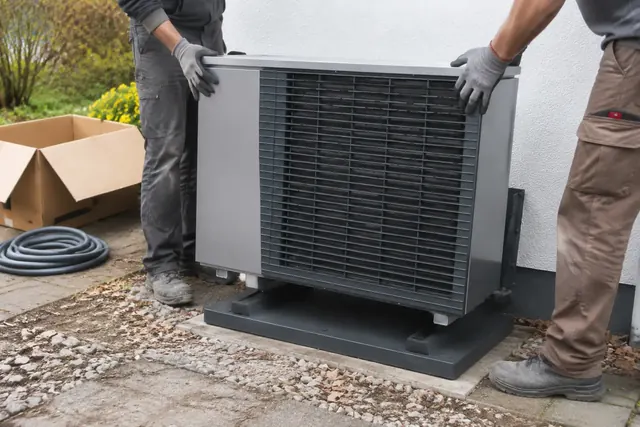
New heat pump outdoor unit being lowered onto a composite pad in Spokane
Spokane, WA

Heat Pump Installation in Spokane, WA | ACCA Manual J, S and D With Documented Commissioning

Spokane WA Heat Pump Installation is a heat pump contractor providing heat pump installation for homeowners and property owners across Spokane County, WA and out to the Idaho state line. Every job starts from a load calculation rather than the size of whatever came out.

Installing a heat pump properly is three quarters preparation and one quarter equipment. Before anything is ordered we run an ACCA Manual J load calculation on the actual house, select equipment under Manual S from the manufacturer's expanded performance data, and check the duct design against Manual D if the system is ducted. On the day, refrigerant joints are brazed under flowing nitrogen, the system is pressure tested, evacuated to a deep vacuum and charged by weight. Most residential installations run one to two days.

Request a quote

Tell us what you need and we will call you back.

Indoor design temperature the load calculation is built on
-20°17°32°47°65°85°100°
70°F indoor design

Every load calculation starts from an indoor design temperature, normally 70°F for heating, and works out the heat loss to Spokane's winter design condition. Change that indoor number and the whole calculation moves, which is why it goes on the paperwork.

500 micronsVacuum level we pull to before charging
1-2 daysTypical residential installation
3ACCA protocols followed: Manual J, S and D
Heat Pump Installation Spokane

Spokane WA Heat Pump Installation

What actually matters on an installation

The parts of an installation that determine how long the system lasts are mostly finished before the panels go back on.

  • Manual J load calculation performed on the house, not estimated from the old equipment
  • Brazing done under flowing nitrogen so the inside of the pipe does not oxidise
  • System evacuated to 500 microns and held, with the decay test documented
  • Refrigerant charge weighed in rather than set by pressure and feel

Nitrogen purging during brazing is invisible in the finished job and matters enormously. Without it, brazing copper produces a black flaking oxide scale on the inside of the pipe, and that scale eventually travels into the compressor and the metering device. It is the kind of shortcut nobody can see on handover day and everybody pays for in year six. We do it on every joint and we are happy to be watched doing it.

The usual approach

Size the new system to match whatever came out, braze the joints in open air, charge until the pressures look about right and leave.

How we do it

Calculate the actual load, braze under nitrogen, pull a documented deep vacuum with a decay test, and weigh the charge in against the manufacturer's figure.
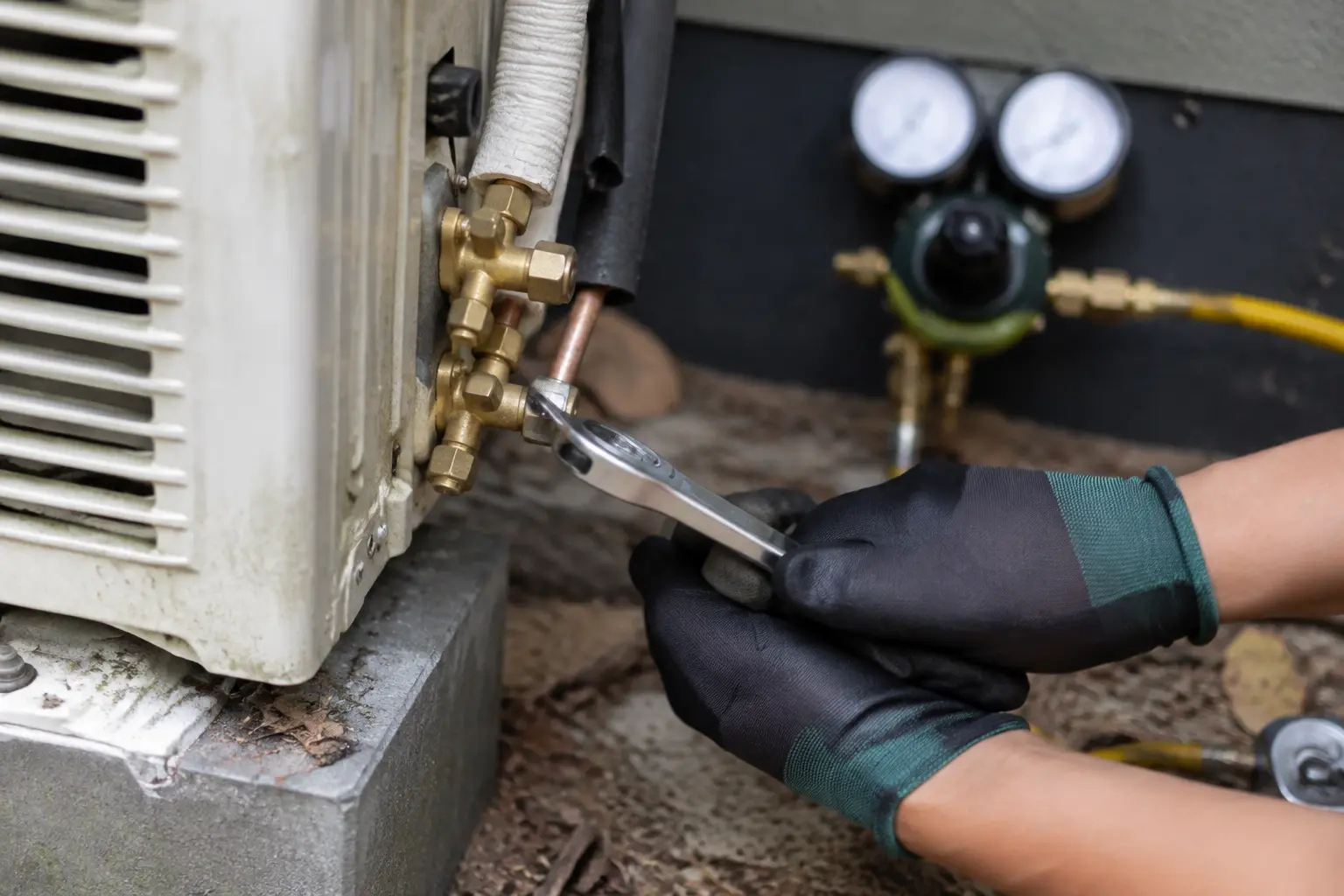
Torque wrench on a flare fitting at a heat pump service valve

At a glance

Load standard
ACCA Manual J
Selection standard
ACCA Manual S
Evacuation
500 microns, decay tested
Charging
By weight, per manufacturer
Detail

Sizing and equipment selection for a new installation

Manual J is a room by room heat loss and heat gain calculation using the actual construction of your house: insulation levels, window area and orientation, air leakage, and Spokane's design conditions. It produces a number in BTU per hour rather than a tonnage guess, and it is common for the result to be meaningfully smaller than the equipment being replaced, because older systems were routinely oversized.

Manual S then selects equipment against that load using the manufacturer's expanded performance data at the relevant outdoor temperatures. This is the step that gets skipped most often, and it is the one that determines whether the system holds capacity when Spokane drops to 5°F. Both documents go to you with the finished job.

What separates a good job from an average one

  • Evacuation removes moisture as well as air. Moisture left in a system combines with refrigerant and oil to form acids that attack the compressor windings.
  • A decay test after evacuation proves the system holds vacuum. Reaching 500 microns briefly and immediately charging proves nothing.
  • Charge weighed in against the manufacturer's figure, adjusted for line set length, is repeatable. Charging by pressure alone is not.
  • Electrical terminations get torqued to specification, because loose lugs generate heat and are a genuine fire risk.
  • The condensate path is tested with water before handover rather than discovered by a ceiling stain in July.

What drives the cost of a heat pump installation

500 micronsEvacuation target
1-2 daysTypical duration
3ACCA protocols applied

Installation pricing is driven by system capacity, efficiency tier, and how much of the existing infrastructure can be reused. Ductwork, electrical supply and the equipment location are the three variables that move a quote most.

We itemise the quote so equipment, labour and any infrastructure work appear separately. If your panel needs a circuit added, or the duct needs modification, that shows as its own line rather than being folded into a single number you cannot interrogate.

How it runs

What happens, in order

Step 01

Survey and calculate

We measure the house, run a room by room Manual J, and check the electrical supply and duct system against what the result requires.

Step 02

Select and quote

Equipment is selected under Manual S from low-temperature performance data, and the quote itemises equipment, labour and any infrastructure work.

Step 03

Install

Old equipment is removed with refrigerant properly recovered, new equipment is set, and refrigerant joints are brazed under flowing nitrogen.

Step 04

Commission and document

The system is pressure tested, evacuated to 500 microns with a decay test, charged by weight, and the commissioning figures are recorded for you.

Before we arrive to install your heat pump

Installation day involves moving substantial equipment in and out, plus electrical and refrigerant work at both ends of the system.

  1. Clear a continuous path from the driveway to the indoor equipment location, including stair landings and doorways.
  2. Clear three feet of working space around the outdoor unit position and remove anything stored on the existing pad.
  3. Make sure the electrical panel is accessible and clear of storage, since the circuit and disconnect are part of the work.
  4. Plan for the heating or cooling to be off for most of the day, and arrange accordingly if anyone in the house is temperature sensitive.
  5. Keep pets secured away from both the indoor work area and the yard, as doors stay open while equipment is moved.

Every installation starts from the same design conditions. Our Spokane heat pump sizing and climate guide explains the Climate Zone 5B figures the load calculation uses and why the old rule of thumb approach no longer passes inspection. Read the guide.

Frequently asked questions

How long does a heat pump installation take?
One to two days for a typical residential system where the equipment location is not changing and the ductwork is serviceable. Adding electrical capacity, modifying duct or relocating equipment extends that, and we tell you which applies before you commit.
Do you really do a load calculation, or estimate from my old system?
We run an actual Manual J and you receive it with the job. Sizing from the outgoing equipment simply repeats whatever mistake was made last time, and older systems in Spokane were commonly oversized, so that error tends to compound.
What does evacuating the system to 500 microns achieve?
It removes moisture and non-condensable gases from inside the refrigerant circuit. Moisture left in the system reacts with the refrigerant and oil to form acids that attack the compressor windings over time. It is a slow failure that shows up years later, which is why the step gets skipped.
Do I need to be present while you install my heat pump?
Someone over eighteen needs to be there to provide access and to be reachable. You do not need to watch the whole job, but we do want ten minutes at the end to walk you through the thermostat and the system's behaviour.
Do you offer free quotes for heat pump installation?
Yes, and the quote visit includes the measurements needed for a real load calculation rather than a guess. You keep that calculation whether or not you hire us.
Will my new system be the same size as my old one?
Frequently not, and usually smaller. Equipment installed twenty years ago was often sized generously by rule of thumb, and insulation and window improvements since then have reduced the load further. A correctly sized system runs longer at lower output, which is more comfortable and more efficient.

Heat Pump Installation in Spokane

Phone
509-352-6630
Quote
Free, includes the load calculation measurements
Typical duration
By weight, per manufacturer
Service area
Spokane County, WA and Post Falls, ID

Heat Pump Installation in Spokane, WA

Call for a load calculation and an itemised quote. You keep the numbers either way.

Request a quote

509-352-6630