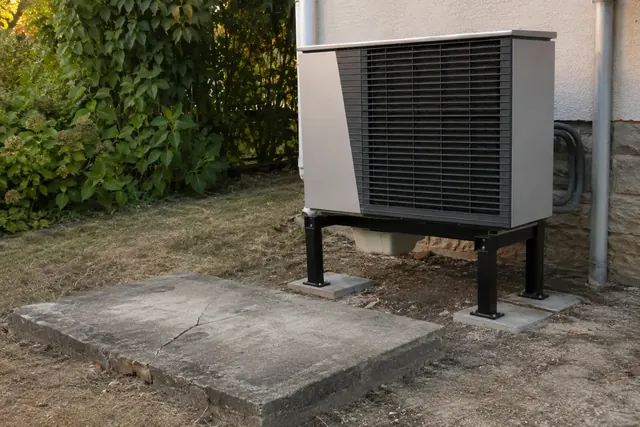
New variable speed heat pump on a raised stand beside the old cracked pad
Spokane, WA

Heat Pump System Upgrades in Spokane, WA | Controls, Clearance and Filtration Fixes Without New Equipment

Spokane WA Heat Pump Installation is a heat pump contractor providing heat pump system upgrades for homeowners and property owners across Spokane County, WA and out to the Idaho state line. Every job starts from a load calculation rather than the size of whatever came out.

Not every problem needs new equipment. A large share of the complaints we hear about existing heat pumps come from installation decisions rather than equipment failures: a unit sitting in a snow drift, controls left on factory defaults, a filter cabinet that starves the blower, or backup heat engaging constantly because nobody set a lockout. Upgrades address those specifically. It is the cheapest useful work in this trade and the least frequently offered, because it does not involve selling a system.

Request a quote

Tell us what you need and we will call you back.

The single most common upgrade we make
-20°17°32°47°65°85°100°
Backup heat lockout

Setting a backup heat lockout temperature on a system that has never had one is frequently the highest value change available. Resistance heat runs at a coefficient of performance of exactly one, so stopping it engaging unnecessarily has a direct and immediate effect on running cost.

DefaultsWhere most control settings are still sitting
No new equipmentWhat most upgrades require
Half dayTypical duration for a control and clearance upgrade
Heat Pump System Upgrades Spokane

Spokane WA Heat Pump System Upgrades

What actually matters on a system upgrade

Upgrades are diagnostic work first. The value comes from identifying which constraint is actually limiting the system.

  • Control configuration reviewed against the actual equipment rather than left on defaults
  • Outdoor unit elevation and clearance corrected for snow, drainage and airflow
  • Filter arrangement assessed against measured static pressure before anything is changed
  • Backup heat staging and lockout set so resistance heat is genuinely a last resort

The most common single thing we correct is a system whose backup heat has no lockout configured. The thermostat calls for resistance heat far more readily than the equipment needs, and because resistance heat converts electricity to heat at a strict one to one ratio, the effect on a winter bill is significant. It takes minutes to correct on most systems and it is almost never done at installation.

The usual approach

Tell the customer their system is old and quote a replacement, because there is more margin in equipment than in configuration work.

How we do it

Measure what the existing system is actually doing, correct the settings and physical issues that are limiting it, and only recommend replacement if that genuinely will not solve it.
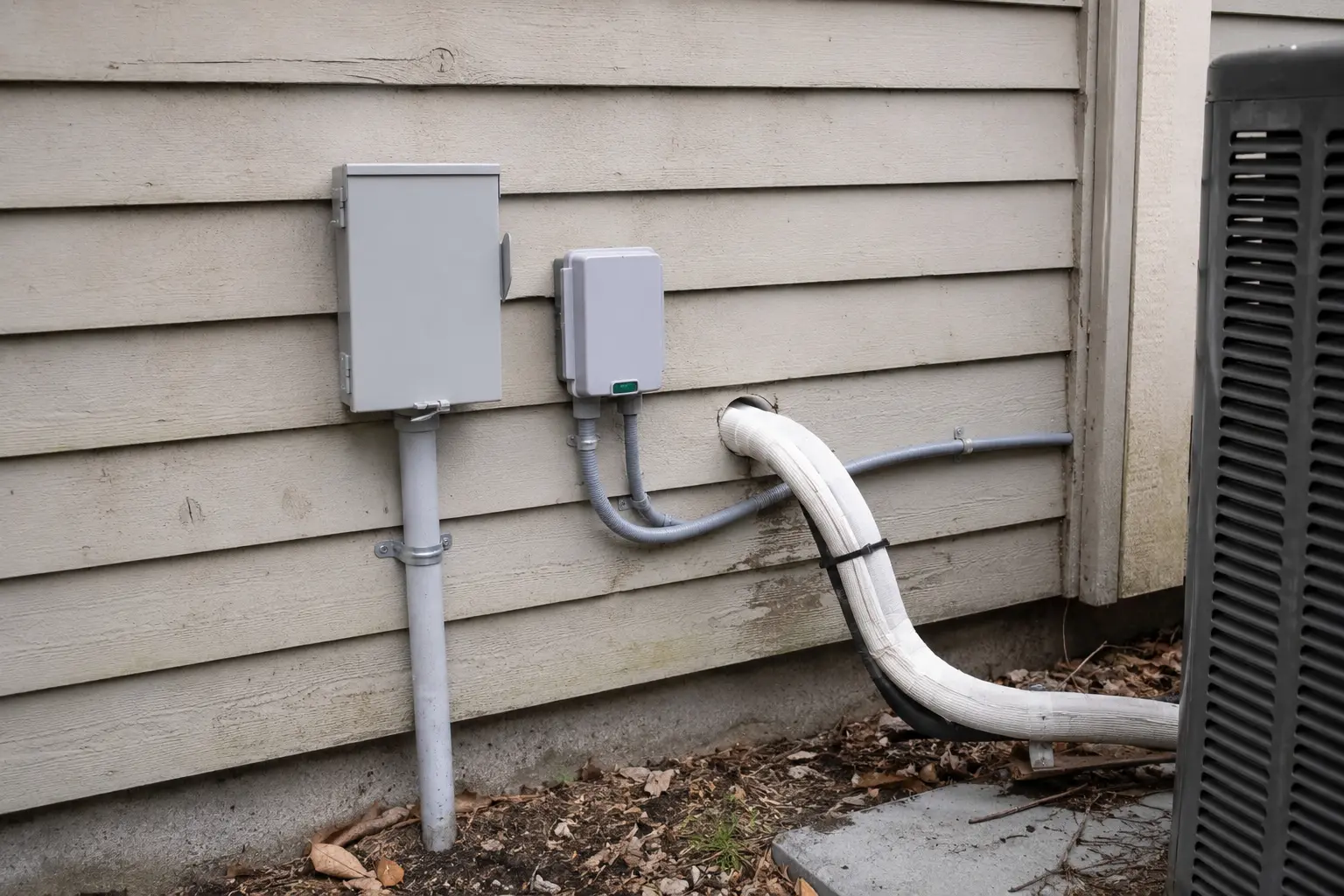
New exterior disconnect and surge protection beside a heat pump line set

At a glance

Typical scope
Controls, clearance, elevation, filtration
Equipment needed
Usually none
Highest value item
Backup heat lockout
Duration
Often half a day
Detail

How we decide what is actually limiting the system

The starting point is measurement rather than inspection: total external static pressure, temperature split across the indoor coil, capacitance and amperage on the motors, and superheat or subcooling against the manufacturer's target. Those four sets of readings usually identify the constraint within an hour.

From there the recommendation follows the evidence. High static pressure points at the duct or filter. A narrow temperature split with normal static points at charge or capacity. Normal readings across the board with high running costs usually points at controls, and specifically at backup heat engaging when it should not. Each of those has a different remedy, and only one of them ever needs new equipment.

What separates a good job from an average one

  • Control configuration is checked against the specific equipment, since a correct setting for one system is wrong for another.
  • Outdoor unit elevation matters in Spokane specifically, because a unit at ground level sits in drifted snow and its own defrost meltwater.
  • Clearance around the coil faces affects capacity directly, and fences, shrubs and decking added since installation are common culprits.
  • Filter arrangement gets assessed against measured static pressure, because a filter upgrade done without that measurement usually makes things worse.
  • Line set insulation degrades under ultraviolet exposure, and bare or crumbling insulation on the suction line is a real and easily fixed loss.

What drives the cost of a system upgrade

1 hrTypical diagnostic portion
NoneEquipment required for most upgrades
COP 1.0What resistance backup heat delivers

Upgrade work is priced on the diagnostic visit plus whatever remedial work is agreed. Control configuration and clearance corrections are at the low end. Adding a properly sized filter cabinet or correcting the equipment elevation involves materials and more labour.

We will tell you when an upgrade will not solve the problem. If the equipment is genuinely undersized or at the end of its life, configuration work will not fix that, and we would rather say so than take payment for improvements that will not deliver.

How it runs

What happens, in order

Step 01

Measure the system

Static pressure, temperature split, capacitance, amperage and refrigerant readings identify what is actually limiting performance.

Step 02

Identify the constraint

The readings point at duct, charge, capacity or controls, and each of those has a different and specific remedy.

Step 03

Agree the work

You get told what will improve and by roughly how much, including where the honest answer is that an upgrade will not be enough.

Step 04

Correct and verify

The agreed work is carried out and the same measurements are retaken so the improvement is documented rather than asserted.

Before we arrive to upgrade your system

Upgrade visits are diagnostic, so the more you can tell us about the symptom, the more targeted the work.

  1. Have twelve months of electricity bills available if possible, since a winter spike relative to summer usually indicates backup heat running excessively.
  2. Note specifically which rooms underperform and in which season, as that distinguishes an airflow problem from a capacity problem.
  3. Photograph the outdoor unit from a few feet back so we can see clearance and elevation before arriving.
  4. Find the make and model of your thermostat as well as the equipment, since control compatibility determines what configuration is possible.
  5. Clear access to the outdoor unit, the air handler and the thermostat, since an upgrade visit touches all three.

Filtration upgrades are the most commonly requested and most commonly botched. Our wildfire smoke and filtration guide explains why static pressure has to be measured before a filter is changed, and what MERV-13 actually requires of a system. Read the guide.

Frequently asked questions

Can you improve my system without replacing it?
Very often, yes. A large share of performance complaints come from configuration and installation decisions rather than equipment faults. Backup heat with no lockout, an outdoor unit sitting in snow, restricted clearance and a filter that starves the blower are all correctable without new equipment.
Why is my winter electricity bill so much higher than my summer one?
Usually because backup resistance heat is running far more than it needs to. Resistance heat produces exactly one unit of heat per unit of electricity while the heat pump does considerably better, so every unnecessary hour is visible on the bill. Setting a lockout temperature is often the fix.
Should I put a better filter in my system?
Only after measuring static pressure. A denser filter adds resistance, and dropping a MERV-13 filter into a system that has no headroom starves the blower and reduces capacity. The upgrade is usually a deeper filter cabinet rather than a denser filter in the existing slot.
Do I need to be present while you upgrade my system?
Yes, because an upgrade visit is a conversation as much as a job. We measure, tell you what we found, and agree what is worth doing before any work happens.
Do you offer free quotes for system upgrades?
The diagnostic portion is chargeable because it is measurement work with test equipment. Any remedial work identified is then quoted before we proceed, and you are free to decline all of it.
What if the upgrade does not fix it?
Then we tell you that before doing the work rather than after. If the measurements show the equipment is undersized or failing, configuration changes will not solve that, and we will say so plainly at the point where you still have the choice.

Heat Pump System Upgrades in Spokane

Phone
509-352-6630
Quote
Free, includes the load calculation measurements
Typical duration
Often half a day
Service area
Spokane County, WA and Post Falls, ID

Heat Pump System Upgrades in Spokane, WA

Call for a load calculation and an itemised quote. You keep the numbers either way.

Request a quote

509-352-6630