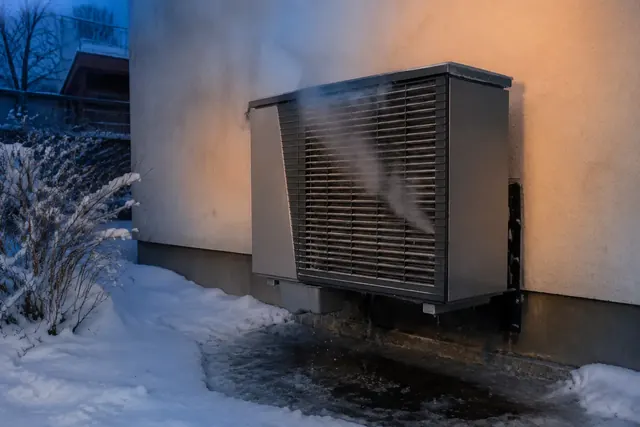
Air source heat pump in defrost cycle with steam rising off the coil in winter
Spokane, WA

Air Source Heat Pumps in Spokane, WA | Sized From Low-Temperature Capacity Data, Not Tonnage

Spokane WA Heat Pump Installation is a heat pump contractor providing air source heat pumps for homeowners and property owners across Spokane County, WA and out to the Idaho state line. Every job starts from a load calculation rather than the size of whatever came out.

An air source heat pump extracts heat from outdoor air, which sounds implausible in January until you remember that air at 0°F still contains a great deal of thermal energy relative to absolute zero. The engineering question is not whether heat is available but how much capacity the equipment retains as the outdoor temperature falls, and that answer varies enormously between models with identical nameplate ratings. This is the most common heat pump type in Spokane by a wide margin, and specifying one properly means reading the low-temperature performance tables rather than the marketing.

Request a quote

Tell us what you need and we will call you back.

Where published capacity is measured versus where Spokane needs it
-20°17°32°47°65°85°100°
5°F design condition

Headline capacity is published at 47°F. Spokane's winter design condition sits far to the left of that, so the number that matters is the capacity the equipment still produces at 5°F, which is where we read the tables.

0-5°FExtreme winter minimums Spokane sees most years
125-150Frost days per year in the Spokane area
5-10 minTypical defrost cycle duration
Air Source Heat Pumps Spokane

Spokane WA Air Source Heat Pumps

What actually matters on an air source system

Air source equipment lives outdoors through everything Spokane produces. Installation details that seem cosmetic in a mild climate are functional here.

  • Capacity read from the expanded performance table at 17°F and 5°F, not the 47°F headline
  • Unit elevated on a stand so defrost meltwater drains clear rather than refreezing under the base
  • Defrost behaviour explained before install, since steam off the coil alarms people who were not warned
  • Clearances maintained on the coil face so the unit is not recirculating its own discharge air

Defrost is the part of air source operation that generates the most worried phone calls, and almost always unnecessarily. When the outdoor coil accumulates frost, the unit briefly reverses into cooling mode to melt it, which produces visible steam and a change in sound. It looks alarming and it is completely normal. What is not normal is a unit that defrosts constantly, or one sitting in a pool of ice because the base pan cannot drain, which is why mounting height matters here.

The usual approach

Set the unit on a slab at ground level, quote the 47°F capacity figure, and let the homeowner discover defrost behaviour on their own in December.

How we do it

Elevate the unit clear of drifting snow and meltwater, size from the low-temperature tables, and explain exactly what defrost looks and sounds like before the first cold snap.
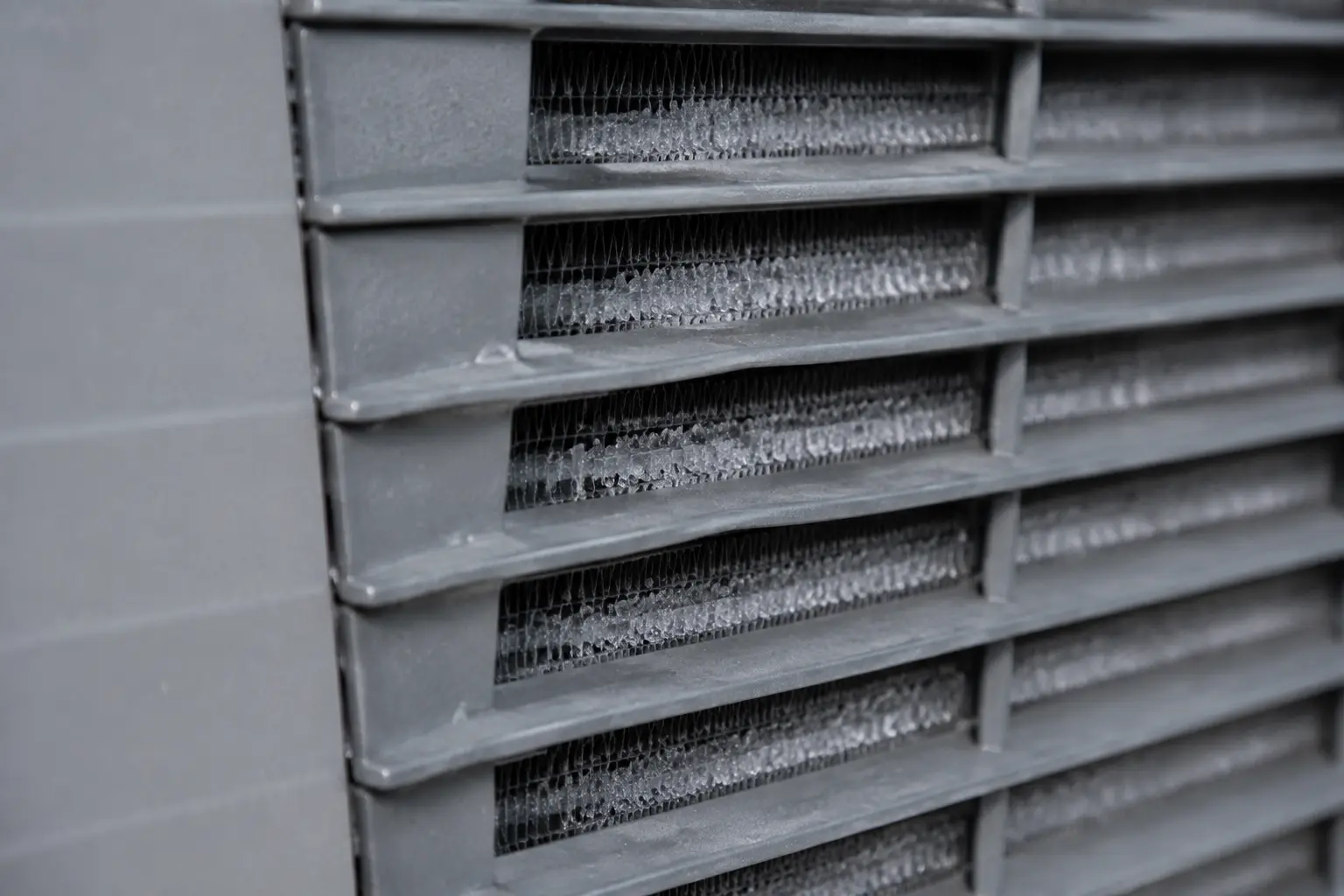
Frost forming between the aluminium coil fins of an air source heat pump

At a glance

Rating point
47°F published, 17°F and 5°F specified
Defrost
Demand or time and temperature initiated
Mounting
Elevated stand for meltwater and snow
Frost days
125 to 150 per year locally
Detail

Sizing and equipment selection for an air source system

The whole selection process for air source in a cold climate turns on one document: the manufacturer's expanded performance data. That table shows capacity and power draw at a grid of outdoor temperatures and indoor conditions, and it is where the real differences between models appear. Two units with the same nominal tonnage and the same headline efficiency can differ by thirty percent or more in the capacity they still deliver at 5°F.

We select against Spokane's winter design condition, then identify the balance point where the equipment's output crosses the building's load. Above that temperature the heat pump carries the house alone. Below it, supplementary heat contributes. Knowing that crossover point before installation is what lets us tell you honestly how the system will behave in a cold snap.

What separates a good job from an average one

  • Mounting height has to clear both drifted snow and the ice that forms from the unit's own defrost meltwater over a long cold spell.
  • Coil face clearance stops the unit recirculating its own discharge air, which quietly destroys capacity on the coldest days when it is needed most.
  • The base pan needs a clear drainage path. Meltwater that refreezes under the unit eventually lifts it off level and stresses the line set.
  • Sound levels matter more on tight valley lots than on acreage, and inverter units running at part load are considerably quieter than single-stage units cycling.
  • Spring pollen and late summer wildfire ash both load the outdoor coil, so annual cleaning has a measurable effect on capacity here.

What drives the cost of an air source heat pump

47°FWhere headline capacity is published
5°FWhere Spokane's design condition sits
125-150Local frost days per year

Air source pricing tracks capacity, efficiency tier and how much of the existing installation can be reused. The largest single variable is usually whether the indoor section, line set and electrical supply all stay as they are or need work.

The efficiency tier decision is where we spend most quoting conversations. A higher tier inverter unit costs more upfront and holds far more of its capacity at low temperature, which in this climate is a performance question rather than purely an operating cost question.

How it runs

What happens, in order

Step 01

Assess the site

We look at the existing unit location, clearances, snow exposure and drainage, and confirm what the electrical supply will support.

Step 02

Read the low-temperature data

Equipment is selected from expanded performance tables at 17°F and 5°F, and we identify the balance point for your specific house.

Step 03

Install and elevate

The outdoor section is set on a stand that clears snow and meltwater, connected, and the system is pressure tested and evacuated.

Step 04

Verify in heating mode

Charge is set to the manufacturer's target and operation is confirmed in heating, with defrost behaviour demonstrated and explained.

Before we arrive to work on an air source system

Almost all air source work happens at the outdoor unit, so access and clearance around it are what matter most.

  1. Clear snow and ice from the path to the outdoor unit and from the unit itself if work is happening in winter.
  2. Cut back shrubs, ornamental grasses and fence panels that have encroached within two feet of the coil faces.
  3. Move garden hoses, planters and stored items off the equipment pad and its surroundings.
  4. Secure any dog that has access to the yard where the outdoor unit sits, since the panels come off and the compartment is open.
  5. If you have noticed the unit icing up or defrosting unusually often, note roughly when and in what weather, as that narrows diagnosis considerably.

Balance point and design temperature do most of the work in specifying an air source system. Our Spokane heat pump sizing and climate guide sets out the Climate Zone 5B design conditions and heating degree day figures we work from. Read the guide.

Frequently asked questions

Do air source heat pumps actually work in Spokane winters?
Yes, and they are the most common type installed here. The caveat is specification: the equipment has to be selected from its low-temperature capacity data rather than its 47°F headline rating. A unit chosen properly for Spokane's design condition works. One chosen from a nominal tonnage chart may not.
Why does my heat pump steam and change sound in cold weather?
That is the defrost cycle and it is normal operation. Frost accumulates on the outdoor coil, so the unit briefly reverses to melt it, producing visible steam and a different noise for five to ten minutes. If it is happening every twenty minutes rather than occasionally, that is worth a service call.
What is a balance point and why does it matter?
It is the outdoor temperature at which the heat pump's output exactly matches your home's heat loss. Above it, the heat pump handles everything alone. Below it, supplementary heat makes up the shortfall. We calculate yours during design so you know in advance how the system will behave in a genuine cold snap.
Do I need to be present while you service my air source heat pump?
Not for outdoor work, provided we have gate access and any dogs are secured. If the job involves the indoor section or the thermostat we will need someone to let us in.
Do you offer free quotes for air source heat pumps?
Yes. The quote includes the low-temperature capacity figures for the specific model we are proposing and the calculated balance point for your house, so you can compare quotes on something more meaningful than a tonnage number.
Should the outdoor unit be raised off the ground?
In Spokane, yes. Elevating it clears drifting snow and gives defrost meltwater somewhere to go instead of freezing into a block under the base pan. A unit sitting directly on a slab is a common source of winter complaints here.

Air Source Heat Pumps in Spokane

Phone
509-352-6630
Quote
Free, includes the load calculation measurements
Typical duration
125 to 150 per year locally
Service area
Spokane County, WA and Post Falls, ID

Air Source Heat Pumps in Spokane, WA

Call for a load calculation and an itemised quote. You keep the numbers either way.

Request a quote

509-352-6630