Spokane WA Heat Pump Installation is a heat pump contractor providing heat pump energy audits for homeowners and property owners across Spokane County, WA and out to the Idaho state line. Every job starts from a load calculation rather than the size of whatever came out.
An energy audit measures the house rather than the equipment, and it frequently changes what equipment you should buy. Blower door testing quantifies air leakage, which is often the largest single term in an older Spokane home's heat loss and the one most commonly guessed at in a load calculation. Thermal imaging shows where insulation is missing or has settled. The result is a genuine picture of where the heat is going, which is worth having before spending on a system sized to compensate for problems that could be fixed for less.
Thermal imaging needs a temperature difference between inside and outside to show anything useful. A cold Spokane day produces a strong contrast and makes insulation gaps obvious, which is why audit season here runs through the heating months rather than in summer.
An audit is only worth having if it produces decisions rather than a list of observations.
The most useful outcome of an audit is often that it changes the equipment decision. A house with substantial air leakage has a heat loss that reflects that leakage, and sizing a system to meet it means paying for capacity to heat air that is escaping. Air sealing frequently costs less than the additional equipment capacity it saves, and the result is a smaller system that performs better. That is only visible if the house gets measured first.
Calculate the load from assumptions about the construction, size the equipment to match and let the customer pay to heat the air leaks forever.
Measure the actual air leakage and find the insulation gaps, then let the customer decide whether to fix the house or size the equipment around it.
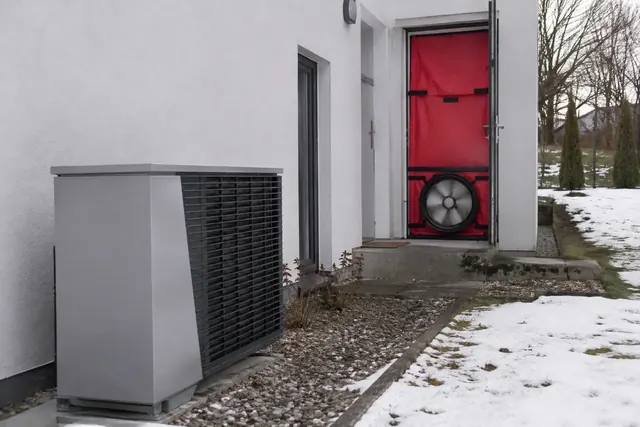
A blower door is a calibrated fan fitted into an exterior doorway that depressurises the house to a standard pressure difference, typically 50 pascals. The airflow required to maintain that pressure is a direct measure of how leaky the envelope is, expressed in air changes per hour. With the house under pressure, leaks become findable by hand or with a smoke pencil.
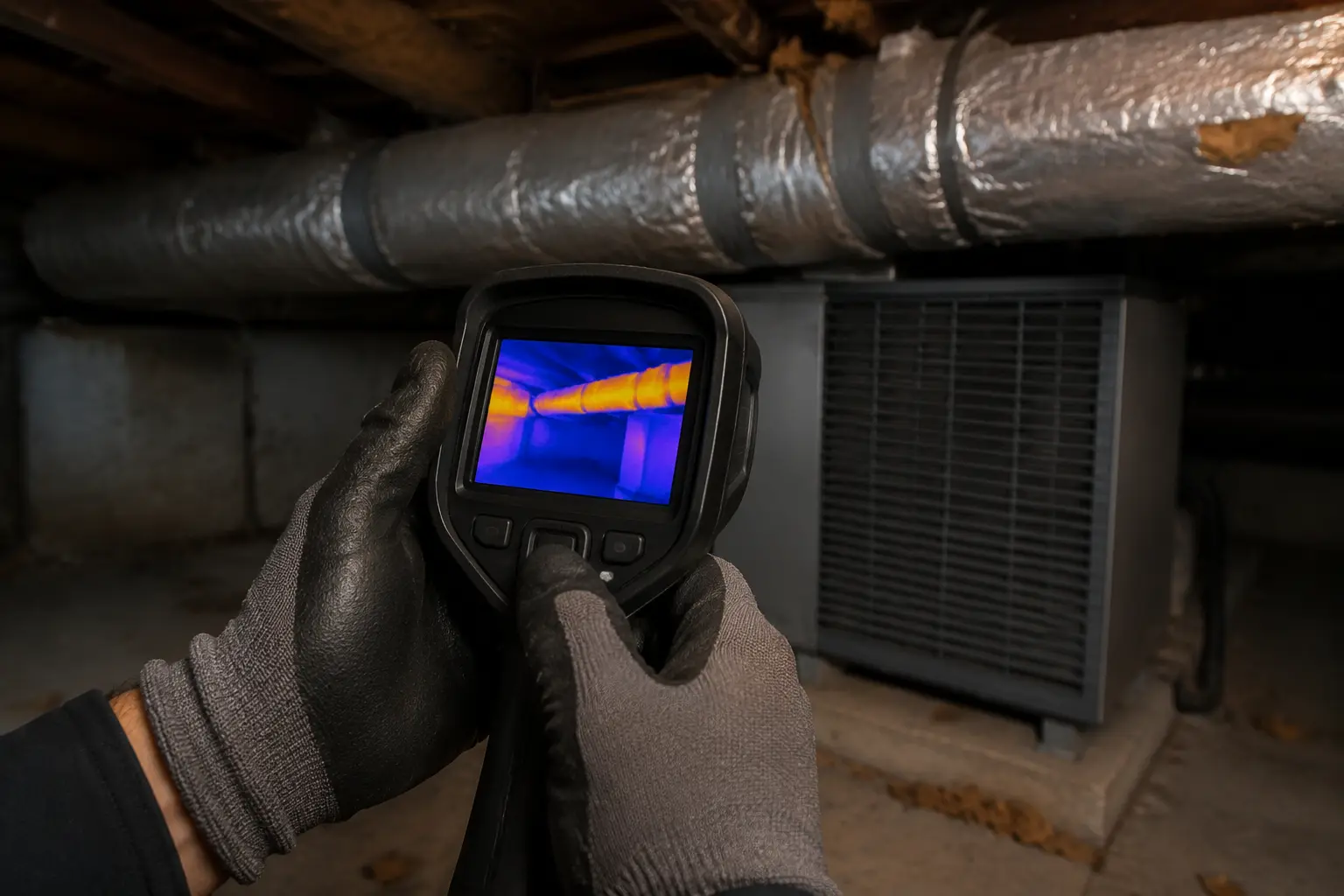
Thermal imaging is done simultaneously, because depressurising the house pulls cold outdoor air through every leak and makes those paths visible on the camera as cold streaks. Running both tests together is considerably more informative than either alone, and it needs a meaningful indoor to outdoor temperature difference, which is why this work is done in the heating season here.
An energy audit is priced as its own piece of work covering the blower door test, thermal imaging, the inspection and a written report with prioritised findings.
Where an audit leads directly into an installation with us, we credit the audit cost against that work, because the measurements feed straight into the load calculation. Either way the report is yours to use however you like.
The blower door is fitted and the house is depressurised to a standard test pressure, with air leakage measured in air changes per hour.
Thermal imaging is carried out with the house under pressure, which makes leakage paths and insulation gaps visible.
Duct leakage in unconditioned space is assessed separately, since it is a different problem with a different remedy.
Findings are presented in order of cost against benefit, so you can see which fixes are worth doing first.
Blower door testing requires the house to be set up in a specific condition, and getting that right beforehand saves time.
Measured air leakage feeds straight into the load calculation. Our Spokane heat pump sizing and climate guide explains how infiltration is treated in a Manual J calculation and why measuring it beats estimating it. Read the guide.
Call for a load calculation and an itemised quote. You keep the numbers either way.
Request a quote