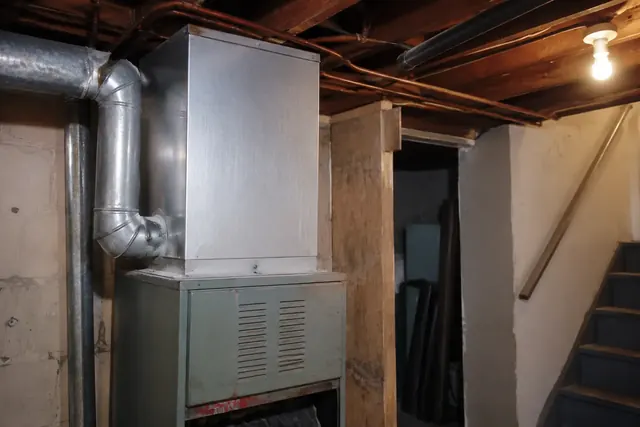
Existing gas furnace with a new heat pump cased coil installed on top
Spokane, WA

Furnace-to-Heat-Pump Conversion in Spokane, WA | Dual Fuel Systems With a Calculated Changeover Point

Spokane WA Heat Pump Installation is a heat pump contractor providing furnace-to-heat-pump conversion for homeowners and property owners across Spokane County, WA and out to the Idaho state line. Every job starts from a load calculation rather than the size of whatever came out.

A furnace to heat pump conversion does not have to mean removing the furnace. In a dual fuel arrangement the furnace stays as the secondary heat source, a heat pump outdoor section and cased coil are added, and the control system switches between them based on outdoor temperature. The heat pump carries the load through the mild majority of a Spokane winter, and the furnace takes over in genuine cold. Setting the changeover point correctly is what makes this work, and it is a calculation rather than a default.

Request a quote

Tell us what you need and we will call you back.

The dual fuel economic balance point
-20°17°32°47°65°85°100°
25-30°F changeover

Above the changeover temperature the heat pump runs because it is cheaper per unit of heat. Below it the furnace takes over. Where exactly that crossover sits depends on your gas rate, your electricity rate and the heat pump's efficiency at that temperature, so it is calculated for your house rather than assumed.

25-30°FTypical economic balance point in this area
80%Roughly the share of winter hours a heat pump can cover here
38°FMinimum changeover temperature allowed under the state code option
Furnace to Heat Pump Conversion Spokane

Spokane WA Furnace-to-Heat-Pump Conversion

What actually matters on a dual fuel conversion

Dual fuel is the most cost effective route for many Spokane homes with existing gas service, provided the details are right.

  • Changeover temperature calculated from your actual gas and electricity rates, not set to a default
  • Furnace confirmed sound and worth keeping before the conversion is recommended
  • Cased coil sized and matched to the furnace's blower and cabinet
  • Controls configured so the two heat sources never run simultaneously

The furnace has to be worth keeping for this to make sense. A dual fuel conversion onto a furnace with a cracked heat exchanger or five years of life left is money spent on the wrong half of the system. We inspect the furnace as part of the assessment and tell you plainly whether the conversion is the right route or whether a full heat pump system with the furnace removed would serve you better.

The usual approach

Fit the coil, wire the changeover to whatever the control board defaults to, and let the furnace pick up far more of the winter than it needs to.

How we do it

Calculate the economic balance point from your actual utility rates and the equipment's performance at that temperature, then set the changeover there.
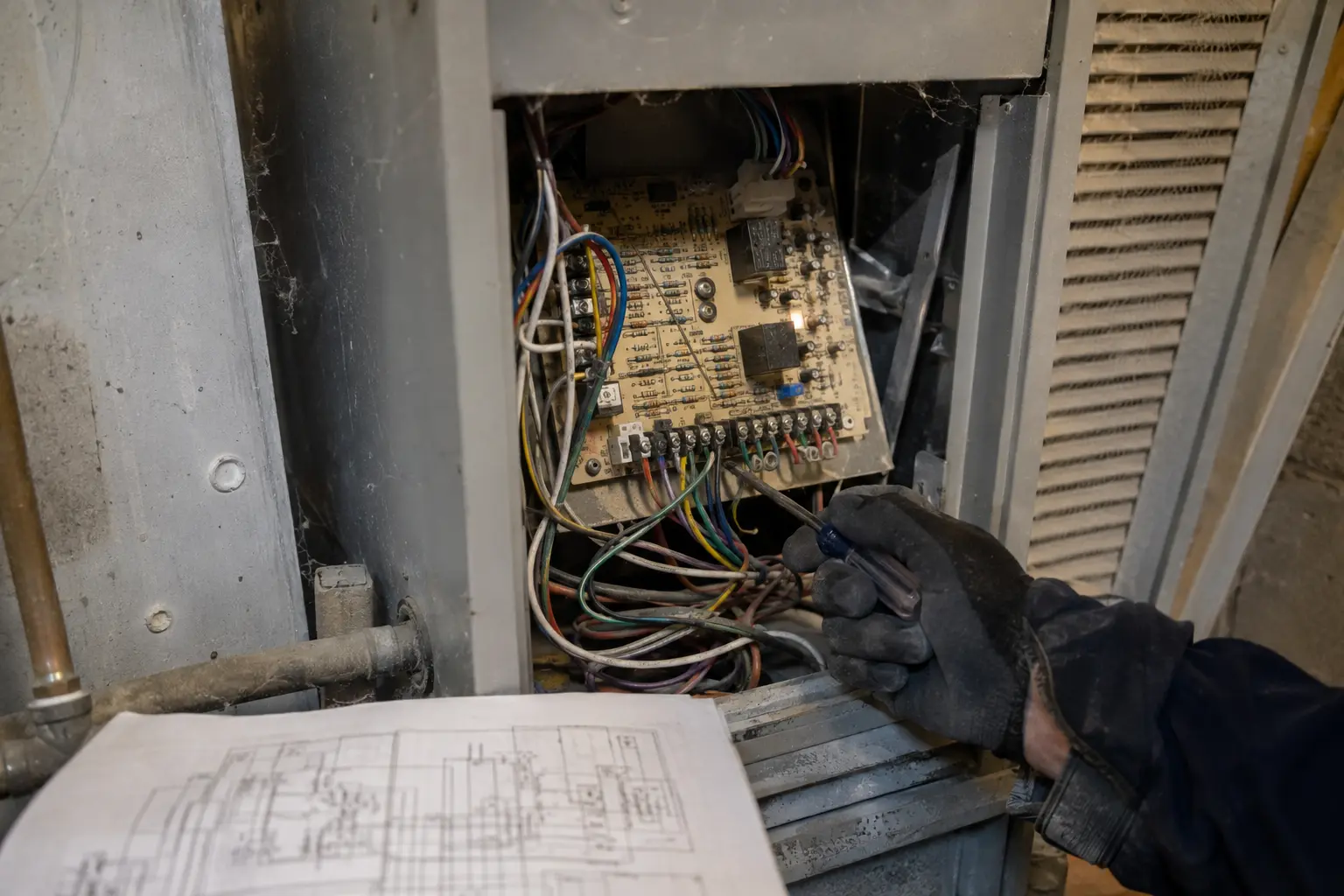
Dual fuel control wiring at a furnace control board in Spokane

At a glance

Configuration
Dual fuel, heat pump plus existing furnace
Changeover
Calculated economic balance point
Typical range
25°F to 30°F locally
Code minimum
38°F or lower under the WSEC option
Detail

How the balance point is actually calculated

There are two different balance points and they get confused constantly. The thermal balance point is the outdoor temperature at which the heat pump's output equals the building's heat loss, and it is a physics question. The economic balance point is the temperature at which running the heat pump costs the same per unit of heat as running the furnace, and it is an arithmetic question involving your gas rate, your electricity rate and the heat pump's coefficient of performance at that temperature.

The economic balance point is usually the higher of the two and it is the one that should set the changeover, because below it you are paying more for heat pump operation than for gas. In this area that number commonly lands between 25°F and 30°F, but it moves with utility rates and we recalculate it rather than repeating a figure from memory.

What separates a good job from an average one

  • The changeover temperature is an economic calculation, not a comfort setting, and it moves whenever utility rates move.
  • Both heat sources must be locked out from running together, since a furnace and a heat pump operating simultaneously can push the refrigerant circuit outside its operating envelope.
  • The existing furnace blower has to be capable of the airflow the heat pump coil needs, which is usually higher than the furnace alone required.
  • Cabinet space above the furnace has to physically accommodate the cased coil, and in tight utility closets it sometimes does not.
  • The furnace runs as fan only during heat pump operation, which means the blower now runs far more hours per year than it used to.

What drives the cost of a dual fuel conversion

25-30°FTypical local changeover
2Heat sources, never running together
Fan onlyHow the furnace runs during heat pump operation

A dual fuel conversion costs less than a full system replacement because the furnace, ductwork and much of the electrical stay in place. The main additions are the outdoor unit, the cased coil, the line set and the control work.

Whether it saves you money depends on your gas and electricity rates, which is why we run that comparison with your actual bills rather than in general terms. In some situations the honest answer is that gas remains cheaper for most of the winter, and we will tell you that.

How it runs

What happens, in order

Step 01

Assess the furnace

We inspect the existing furnace to establish whether it is worth building on, and check blower capacity and cabinet clearance.

Step 02

Calculate the balance point

Your actual gas and electricity rates and the proposed equipment's performance data set the economic changeover temperature.

Step 03

Install

The outdoor unit is set, the cased coil is fitted above the furnace, the line set is run and the control wiring is completed.

Step 04

Configure and verify

Changeover is set to the calculated temperature, simultaneous operation is locked out, and both modes are verified independently.

Before we arrive for a furnace to heat pump conversion

The conversion adds equipment around an existing furnace, so both the furnace area and a new outdoor location need preparing.

  1. Clear the area around the furnace completely, including any storage that has accumulated in the utility space over the years.
  2. Measure or note the clearance above the furnace to the ceiling or ductwork, since the cased coil needs that space.
  3. Have a recent gas bill and a recent electricity bill available, because the economic balance point calculation uses your actual rates.
  4. Identify where you would prefer the new outdoor unit, bearing in mind it needs clearance and a route for the line set to reach the furnace.
  5. Have any service records for the furnace available, since its condition determines whether the conversion is the right recommendation.

Balance point calculations rest on local design conditions. Our Spokane heat pump sizing and climate guide sets out the Climate Zone 5B temperature data and heating degree day figures the arithmetic uses. Read the guide.

Frequently asked questions

Do I have to remove my gas furnace?
No, and in a dual fuel arrangement you deliberately keep it. The furnace becomes the secondary heat source for genuinely cold weather while the heat pump handles the mild majority of the winter. Removing the furnace entirely is a different project with different arithmetic.
What is the balance point and who decides it?
It is the outdoor temperature at which the system switches from heat pump to furnace. We calculate it from your actual gas and electricity rates and the heat pump's efficiency at that temperature, which in this area usually puts it between 25°F and 30°F. It is a calculation rather than a preference.
Will the heat pump and furnace ever run at the same time?
No, and the controls are configured specifically to prevent it. Running both simultaneously can push the refrigerant circuit outside its designed operating conditions, so the changeover is a hard switch rather than a blend.
Do I need to be present while you convert my furnace?
Someone needs to provide access to the furnace area and the outdoor location. We also want to confirm the outdoor unit position with you, and to walk you through the changeover behaviour at handover since the system now behaves differently in different weather.
Do you offer free quotes for furnace to heat pump conversion?
Yes, and the quote includes inspecting your existing furnace to confirm it is worth building on. If it is not, we will tell you that rather than converting onto equipment with a short remaining life.
Is dual fuel actually cheaper than gas alone in Spokane?
It depends on your rates, which is why we run the comparison with your bills. For most of a Spokane winter the outdoor temperature sits above the economic balance point, which is where the heat pump wins. The gas furnace still earns its place during genuine cold snaps.

Furnace-to-Heat-Pump Conversion in Spokane

Phone
509-352-6630
Quote
Free, includes the load calculation measurements
Typical duration
38°F or lower under the WSEC option
Service area
Spokane County, WA and Post Falls, ID

Furnace-to-Heat-Pump Conversion in Spokane, WA

Call for a load calculation and an itemised quote. You keep the numbers either way.

Request a quote

509-352-6630