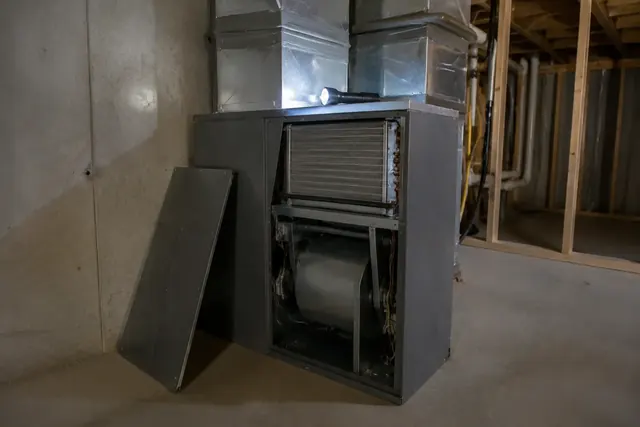
Heat pump air handler with access panel removed during an inspection
Spokane, WA

Heat Pump Inspection in Spokane, WA | Written Condition Reports for Buyers and Warranty Claims

Spokane WA Heat Pump Installation is a heat pump contractor providing heat pump inspection for homeowners and property owners across Spokane County, WA and out to the Idaho state line. Every job starts from a load calculation rather than the size of whatever came out.

An inspection is a different job from a repair visit. Nothing is broken, and the question is condition, remaining life and whether what was installed matches what should have been. People book these before buying a house, when a contractor's diagnosis does not sound right, or when a system that is still under warranty is not performing. The output is a written report with actual measurements rather than a verbal impression, and because we are not being paid to find work, the report says what it says.

Request a quote

Tell us what you need and we will call you back.

Temperature split, the headline number on any inspection
-20°17°32°47°65°85°100°
16-22°F split

The temperature difference across the indoor coil is the fastest indicator of overall system health. A split outside the expected range points to airflow, charge or capacity problems, and it is the first measurement any real inspection takes.

WrittenReport with measurements, not a verbal opinion
IndependentNo repair work quoted from the inspection
Pre-purchaseMost common reason people book one
Heat Pump Inspection Spokane

Spokane WA Heat Pump Inspection

What actually matters on an inspection

An inspection is worth having only if it measures things. Anything else is a walk around with a clipboard.

  • Temperature split measured across the indoor coil in the operating mode
  • Static pressure measured to identify duct or filter restriction
  • Electrical components measured, with capacitance recorded against rating
  • Installation quality assessed, including line set, pad, clearances and condensate

On pre-purchase inspections the most valuable finding is usually not a fault but an installation shortcut. An oversized system, a line set reused after a burnout, missing insulation on a suction line or a condensate arrangement with no safety switch are all things that will cost the new owner money and none of them stop the system running on the day of the inspection. Those are precisely what a written report is for.

The usual approach

Turn the system on, confirm it produces warm and cold air, and write that it appeared to be operating normally at the time of inspection.

How we do it

Measure temperature split, static pressure and capacitance, assess installation quality against how it should have been done, and put the actual figures in a written report.
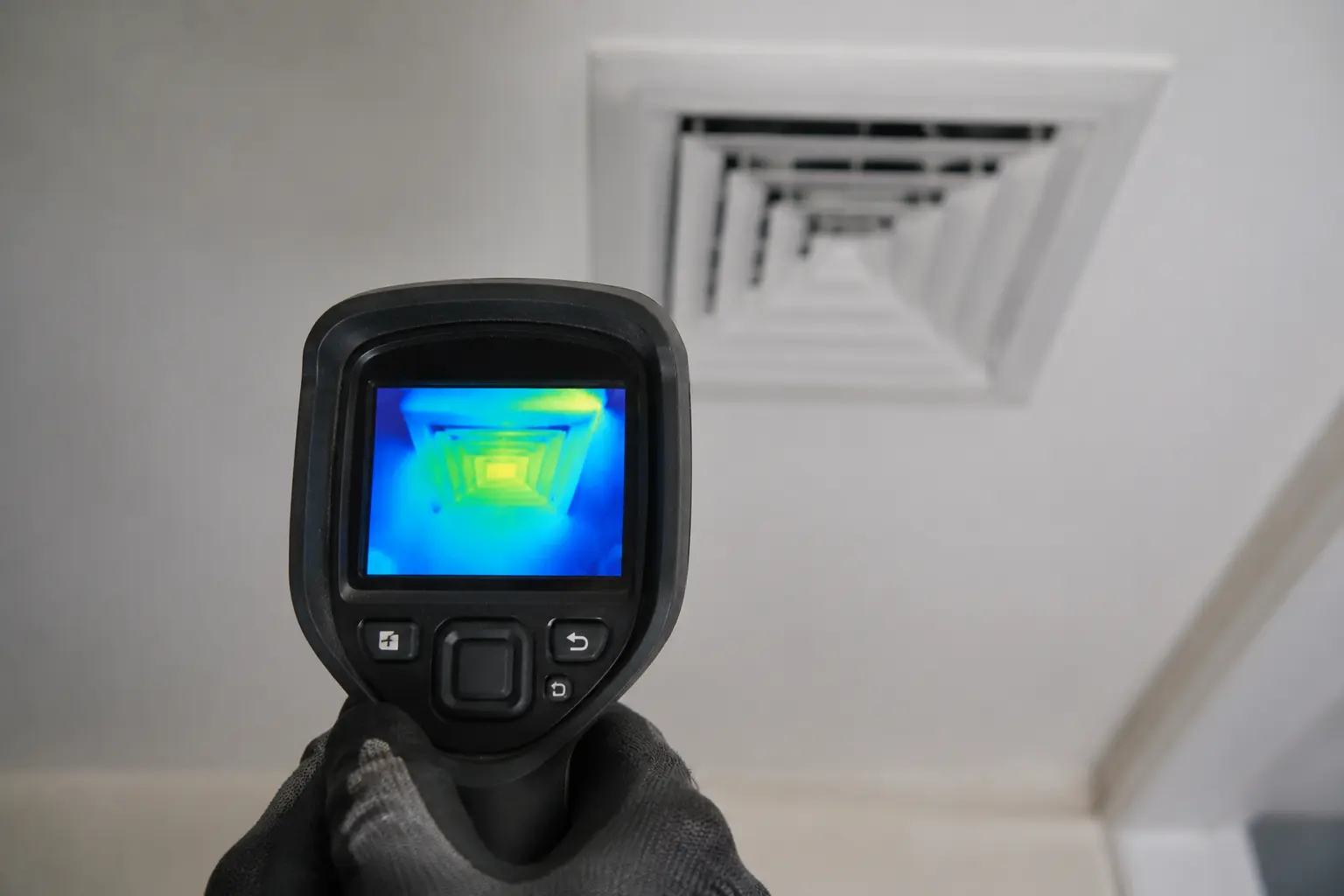
Thermal imaging camera aimed at a ceiling supply register during inspection

At a glance

Deliverable
Written report with measurements
Typical trigger
Home purchase, warranty, second opinion
Independence
No repairs quoted from the inspection
Key measurements
Split, static pressure, capacitance, charge
Detail

What gets measured during an inspection

The core measurements are temperature split across the indoor coil, total external static pressure, capacitance on each run capacitor compared against its rating, amperage draw on the compressor and fan motors compared against nameplate, and superheat or subcooling compared against the manufacturer's target for the day's conditions.

Alongside the measurements, the physical installation is assessed: line set insulation and support, equipment level and pad condition, clearances around the outdoor coil, condensate trap and safety switch, electrical terminations and disconnect condition, and whether the indoor and outdoor sections form a valid matched pair. Each finding appears in the report with a plain explanation of what it means for you.

What separates a good job from an average one

  • Equipment age is established from the serial number rather than guessed, which sets realistic expectations for remaining life.
  • Model numbers on the indoor and outdoor sections are checked for a valid matched pair, since mismatched systems are common and rarely disclosed.
  • Refrigerant type is identified, which matters given the phase-down of older refrigerants and the future cost of servicing.
  • Installation quality is assessed against how it should have been done, not merely whether it currently runs.
  • Anything that will cost the owner money within a few years gets flagged even where it is working perfectly today.

What an inspection covers and costs

WrittenReport format
16-22°FExpected temperature split range
IndependentNo work quoted from it

Inspections are priced as their own piece of work, since they are diagnostic rather than corrective. The fee covers the visit, the measurements and the written report.

We deliberately do not quote repair work from an inspection. If we found problems and immediately offered to fix them, the report would be worth less to you. If you want the work done afterwards that is a separate conversation you are free to have with anyone.

How it runs

What happens, in order

Step 01

Establish the facts

Serial numbers, model numbers, refrigerant type and system age are recorded, and the matched pair is verified.

Step 02

Measure

Temperature split, static pressure, capacitance, amperage and refrigerant readings are all taken under running conditions.

Step 03

Assess the installation

Line set, pad, clearances, condensate, electrical and duct condition are assessed against how they should have been done.

Step 04

Report

You receive a written report with the measurements, the findings and a plain explanation of what each one means financially.

Before we arrive for an inspection

Inspections need full access to everything, since the whole point is that nothing gets skipped.

  1. Arrange access to both the indoor and outdoor equipment, which on a pre-purchase inspection means coordinating with the current occupant.
  2. Have any paperwork available including installation records, service history and warranty documents if they exist.
  3. Allow the system to have been running normally rather than switched off, since several measurements require it to be operating.
  4. Tell us the specific reason for the inspection, because a pre-purchase report and a warranty dispute report emphasise different things.
  5. Make sure the attic or crawlspace is accessible if ductwork runs through either, as duct condition is part of the assessment.

Frequently asked questions

Why would I need a heat pump inspection?
The three common reasons are buying a house and wanting to know what condition the system is in, getting a second opinion on a diagnosis or quote that did not sound right, and documenting a performance problem on a system still under warranty.
Is this different from a home inspector checking it?
Substantially. A general home inspector confirms the system runs and produces conditioned air. We measure temperature split, static pressure, capacitance and refrigerant readings, verify the matched pair and assess installation quality, which are different questions entirely.
Will you quote repairs from the inspection?
No, deliberately. An inspection report is worth more to you if the person writing it is not also selling the remedy. You get the findings and are free to take them to whoever you like, including us as a separate conversation.
Do I need to be present during the inspection?
It helps but is not essential, provided access is arranged. On pre-purchase inspections we usually deal with the listing agent or current occupant, and the report comes to you afterwards regardless.
Do you offer free quotes for inspections?
Inspections are the product rather than the quote, so they carry a fee that we tell you upfront when you book. There is nothing to survey beforehand.
Can an inspection tell me how long the system has left?
It can give you a well founded estimate rather than a guarantee. Age from the serial number, measured performance against specification, component condition and installation quality together produce a realistic picture, and the report says plainly which parts of that are measurement and which are judgement.

Heat Pump Inspection in Spokane

Phone
509-352-6630
Quote
Free, includes the load calculation measurements
Typical duration
Split, static pressure, capacitance, charge
Service area
Spokane County, WA and Post Falls, ID

Heat Pump Inspection in Spokane, WA

Call for a load calculation and an itemised quote. You keep the numbers either way.

Request a quote

509-352-6630